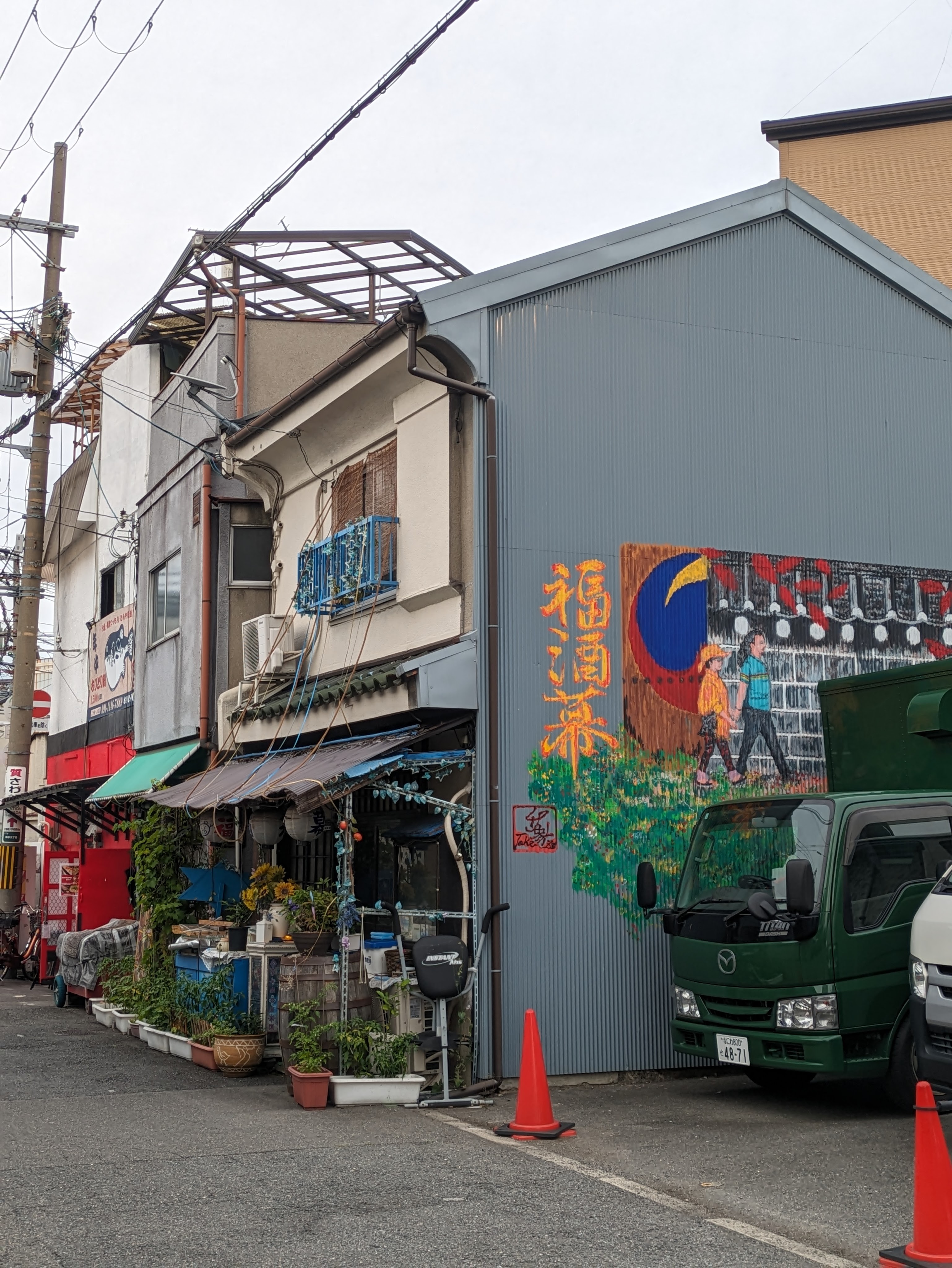
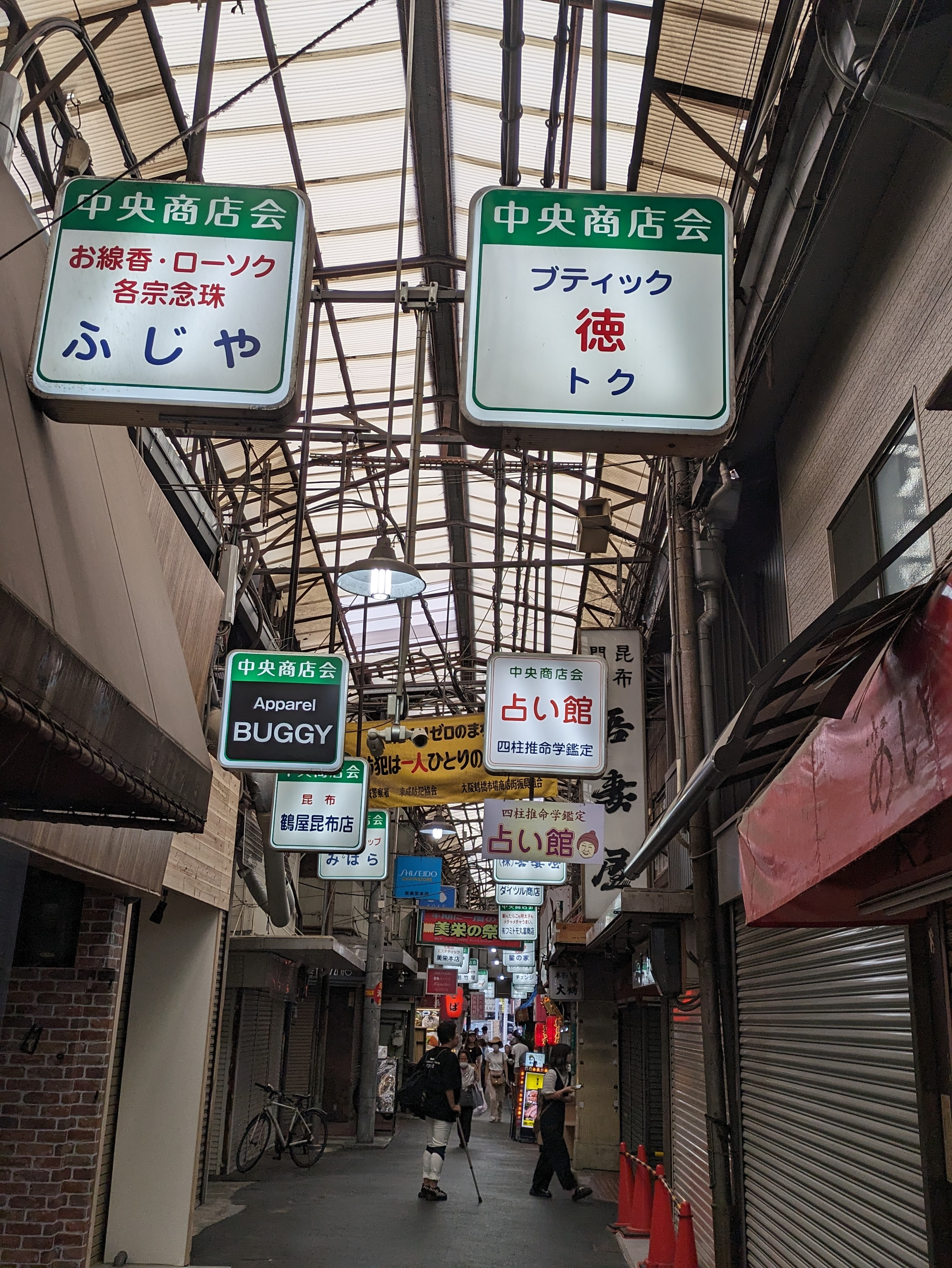
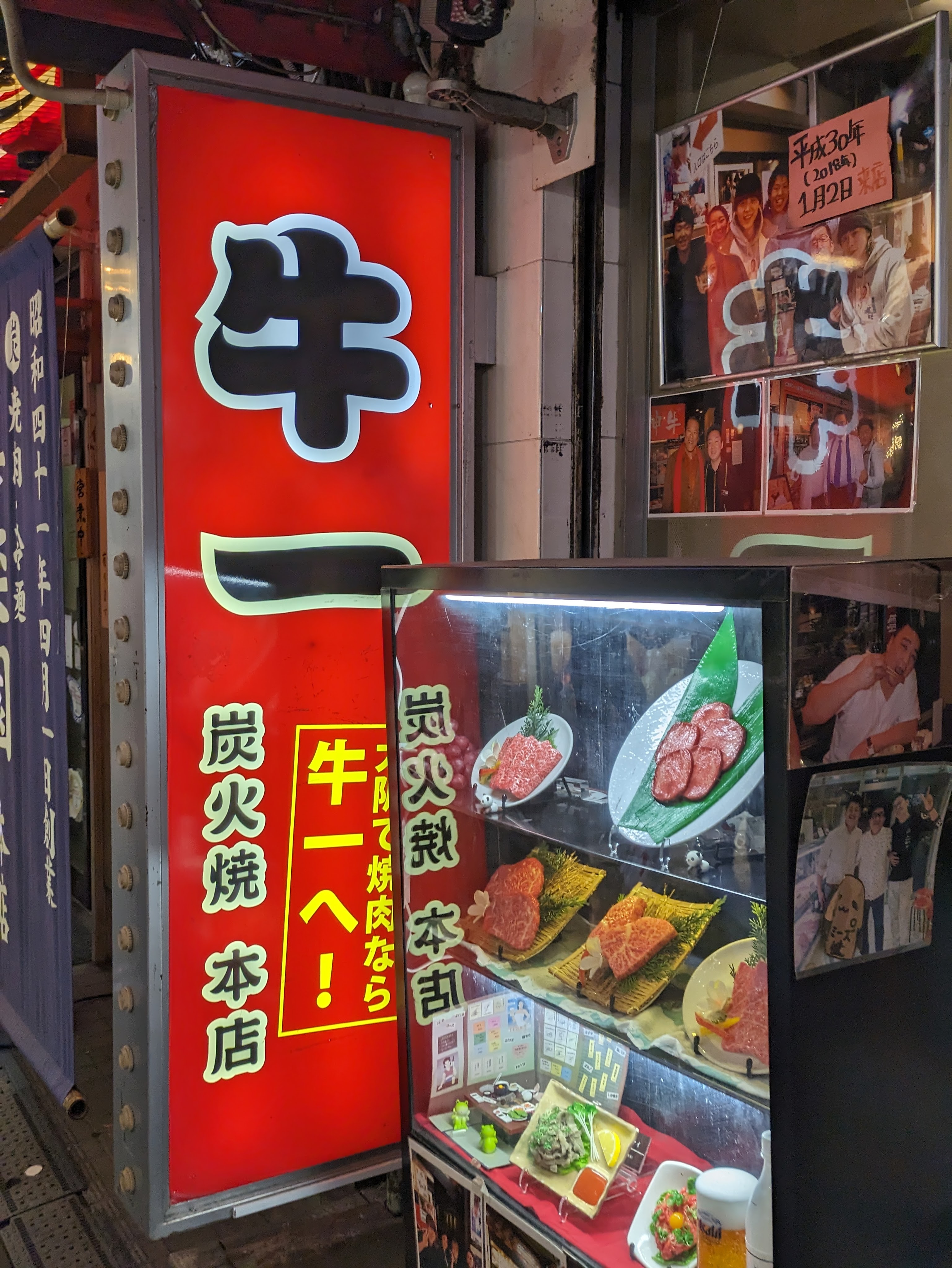
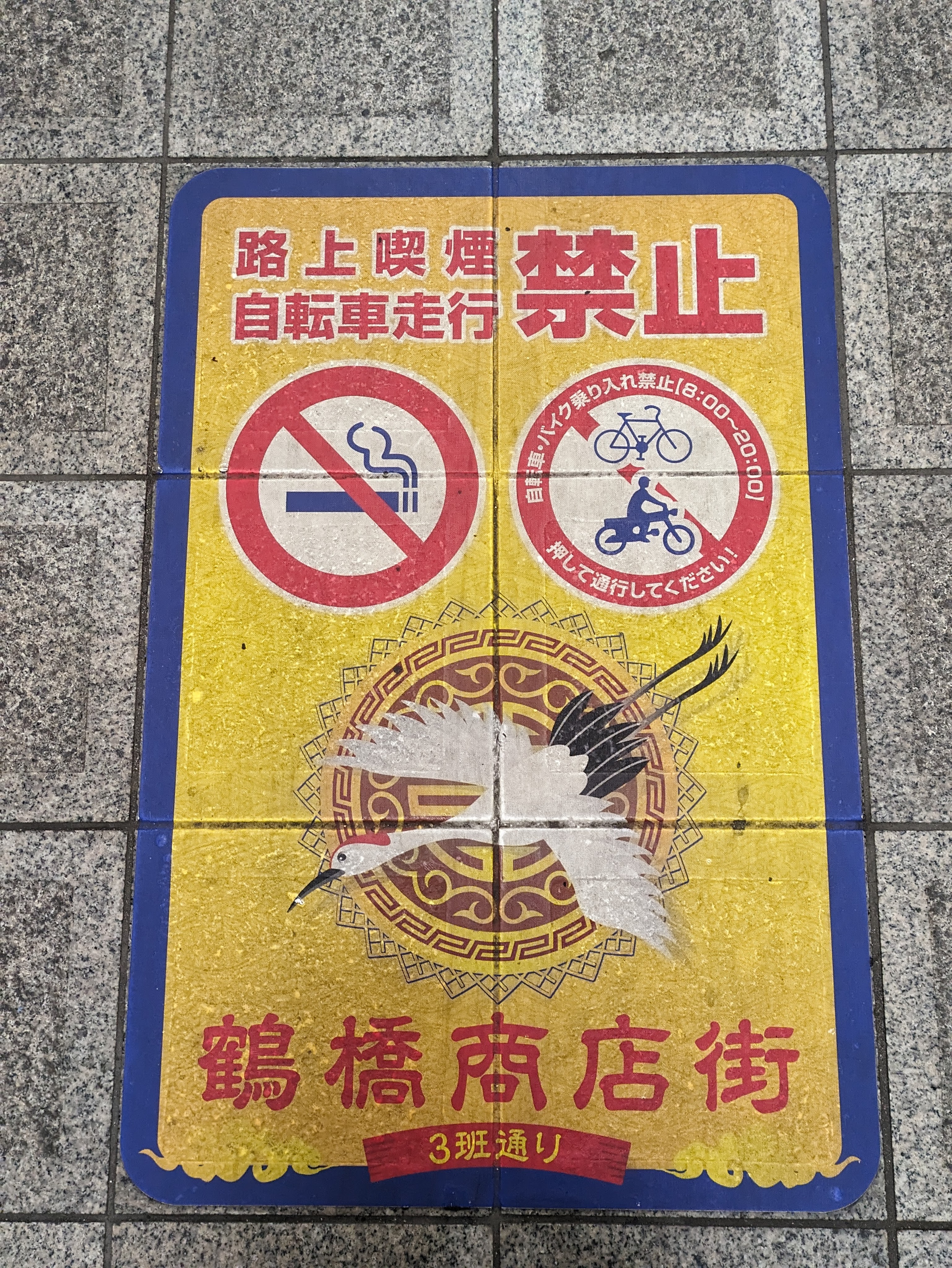
In the South-eastern part of Osaka city, the main street turns into a closed arcade which houses a large wholesale market. This is Tsuruhashi market, part of Ikuno Korean town, the largest Korean town in Japan. Shop sellers call out to visitors to try their kimchi or the fresh seafood that just came in. Red pickled vegetables and meat line the stores.

Walking from the arcade for a few minutes, one arrives at Miyuki dori. The large street caters to slightly different clientele – one obsessed with Kpop. Stores sell posters and goods from all the latest bands alongside snacks and cosmetics. Street vendors show off their wares of hotdogs, fries, and grilled meat.

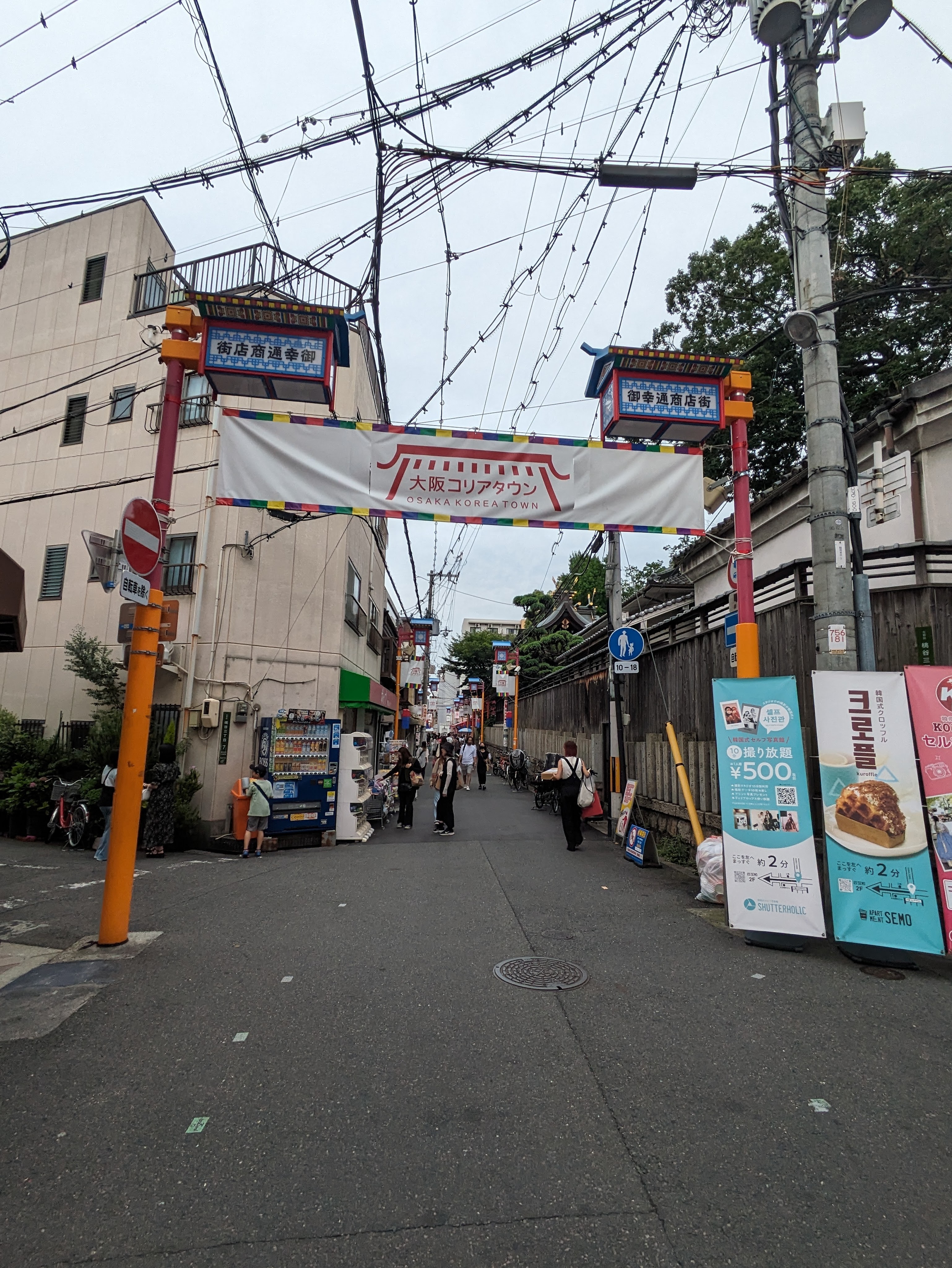
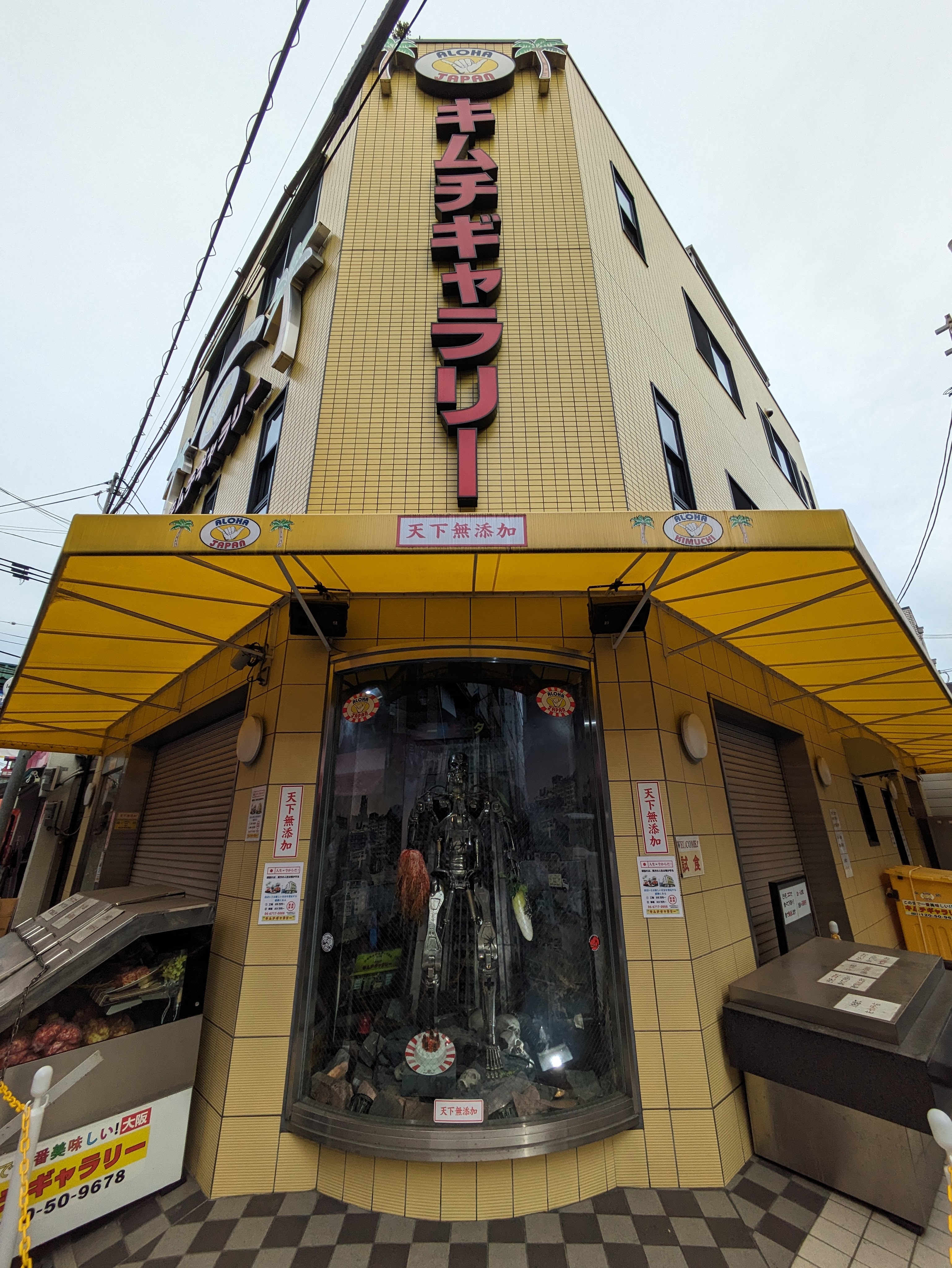
Just a few yards away as though part of a separate ecosystem altogether, is a shrine. 1600 years or so ago, this area was still the seaside. Travelers arrived at the port from the ancient Korean kingdom of Baekche and prayed at Miyuki-mori Shrine.
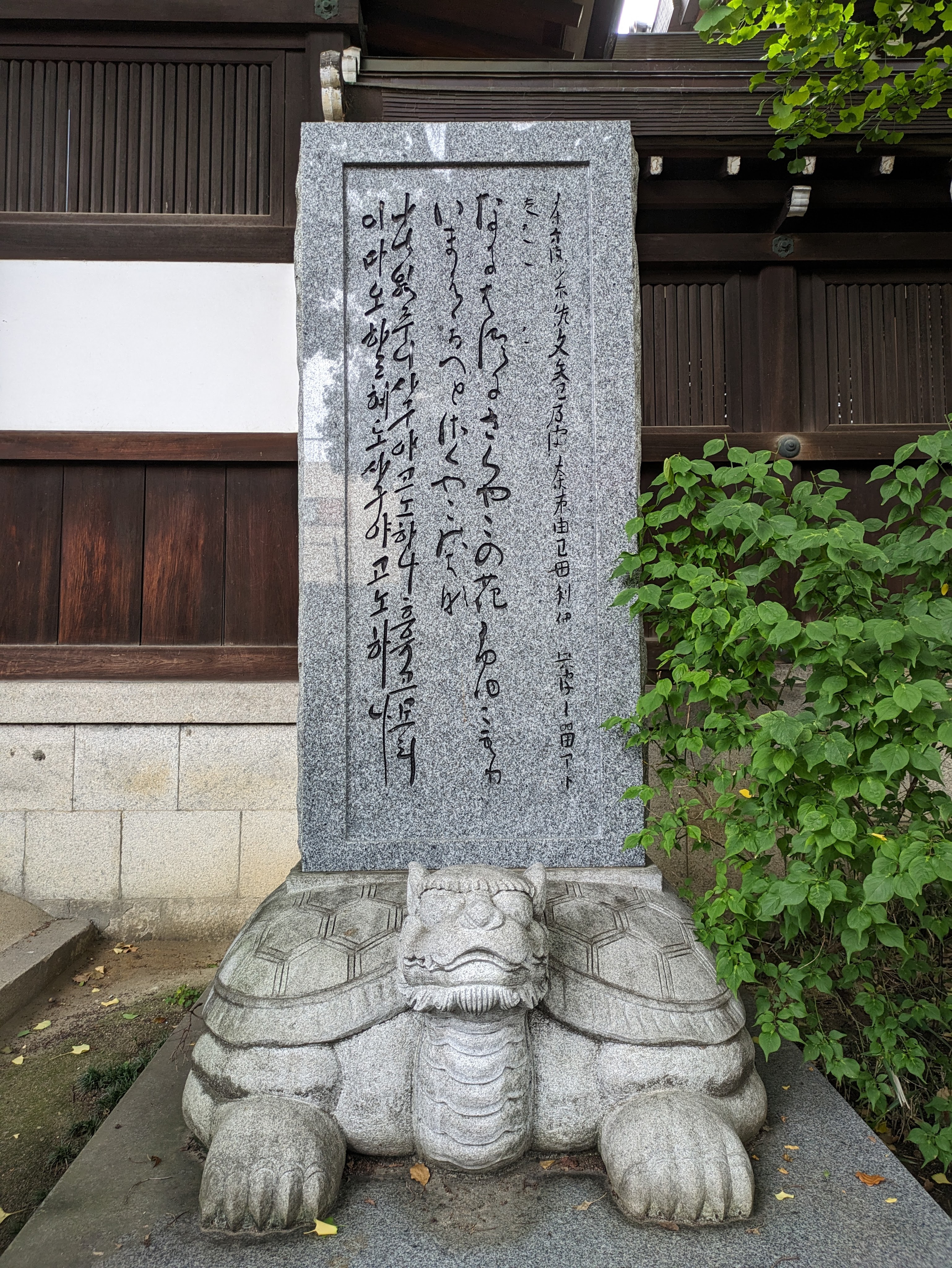
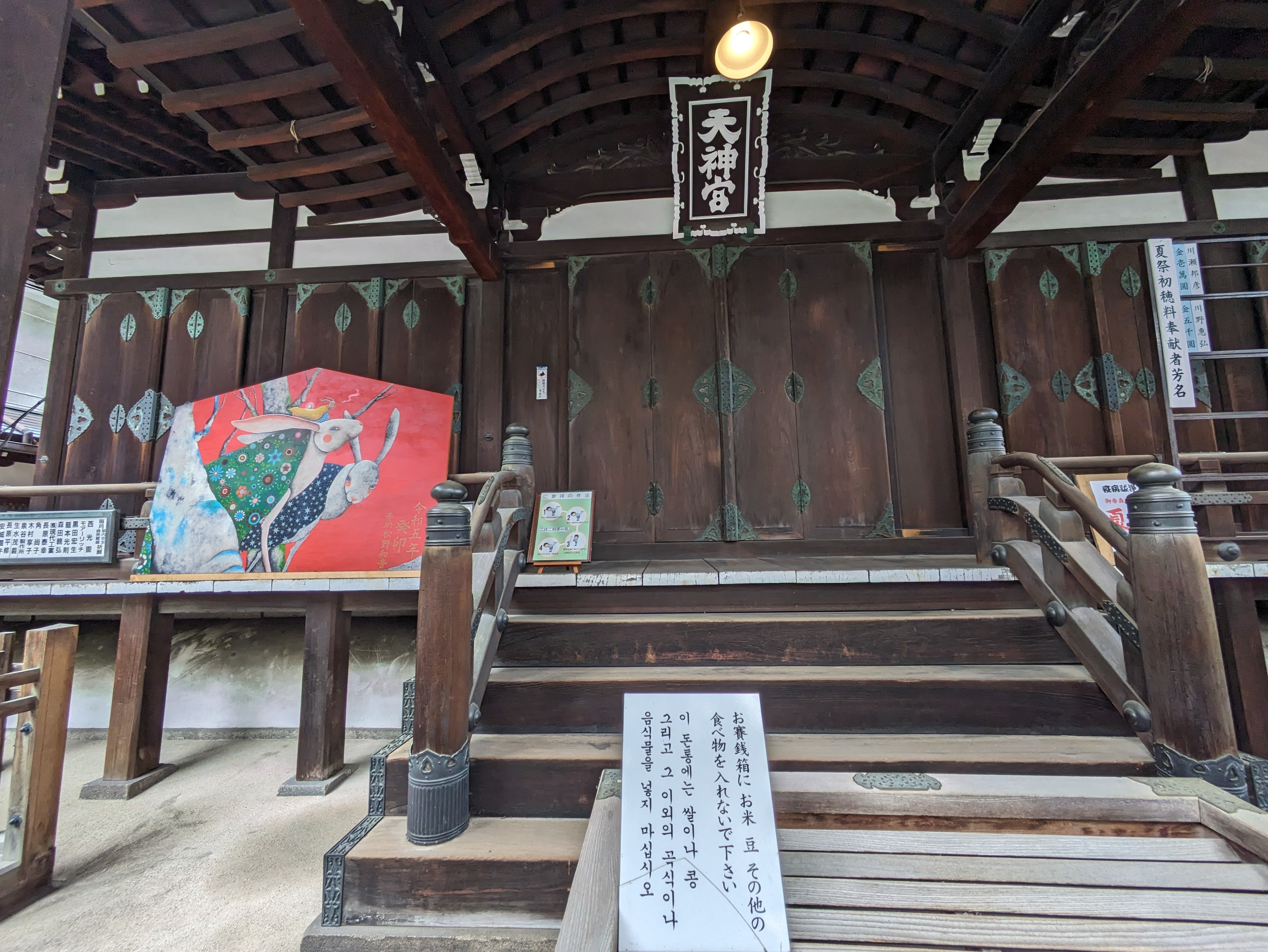
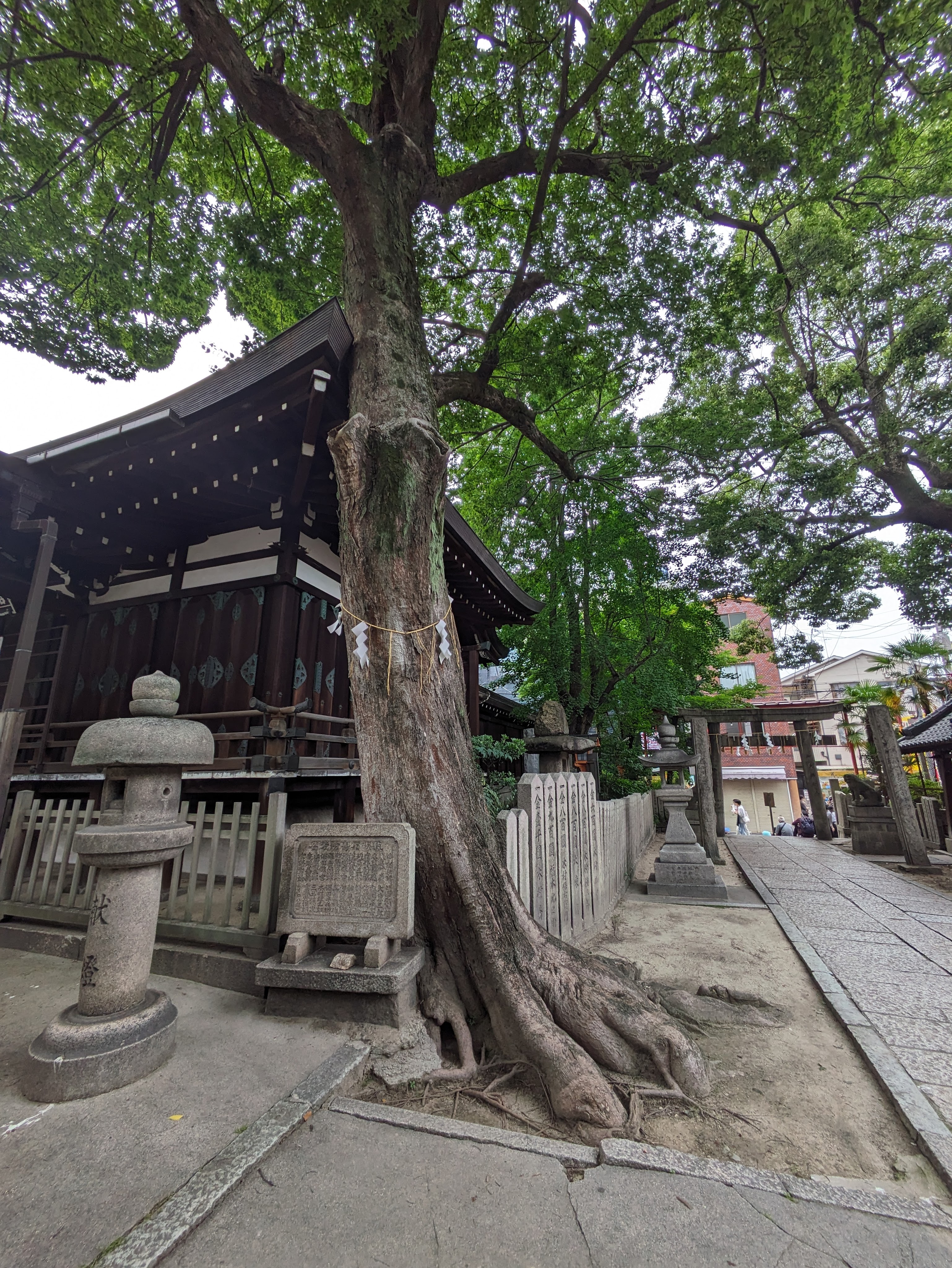
Japan and Korea have a long and tumultuous history going back many centuries. Present day Japan has over four hundred thousand residents of Korean descent. Migrations happened as a result of several factors including among other things – Japan’s colonization of Korea, World War II, and the Korean war. A majority of the residents today are from South Korea, but there are also some from North Korea. Resident status and the identity of these Zainichi Koreans – as they have come to be known – has been complicated, marred by discrimination. There have also been a series of controversial repatriations with several people being repatriated to North Korea. The Korean market in Ikuno originally started as a black market after the war. Two major railways intersect each other in the vicinity, and it served as a good spot to sell goods at a time when everything was scarce. At the time, it might have even been considered to be a dangerous place. Today, the area is a popular tourist destination, and the neighbourhood is more developed.
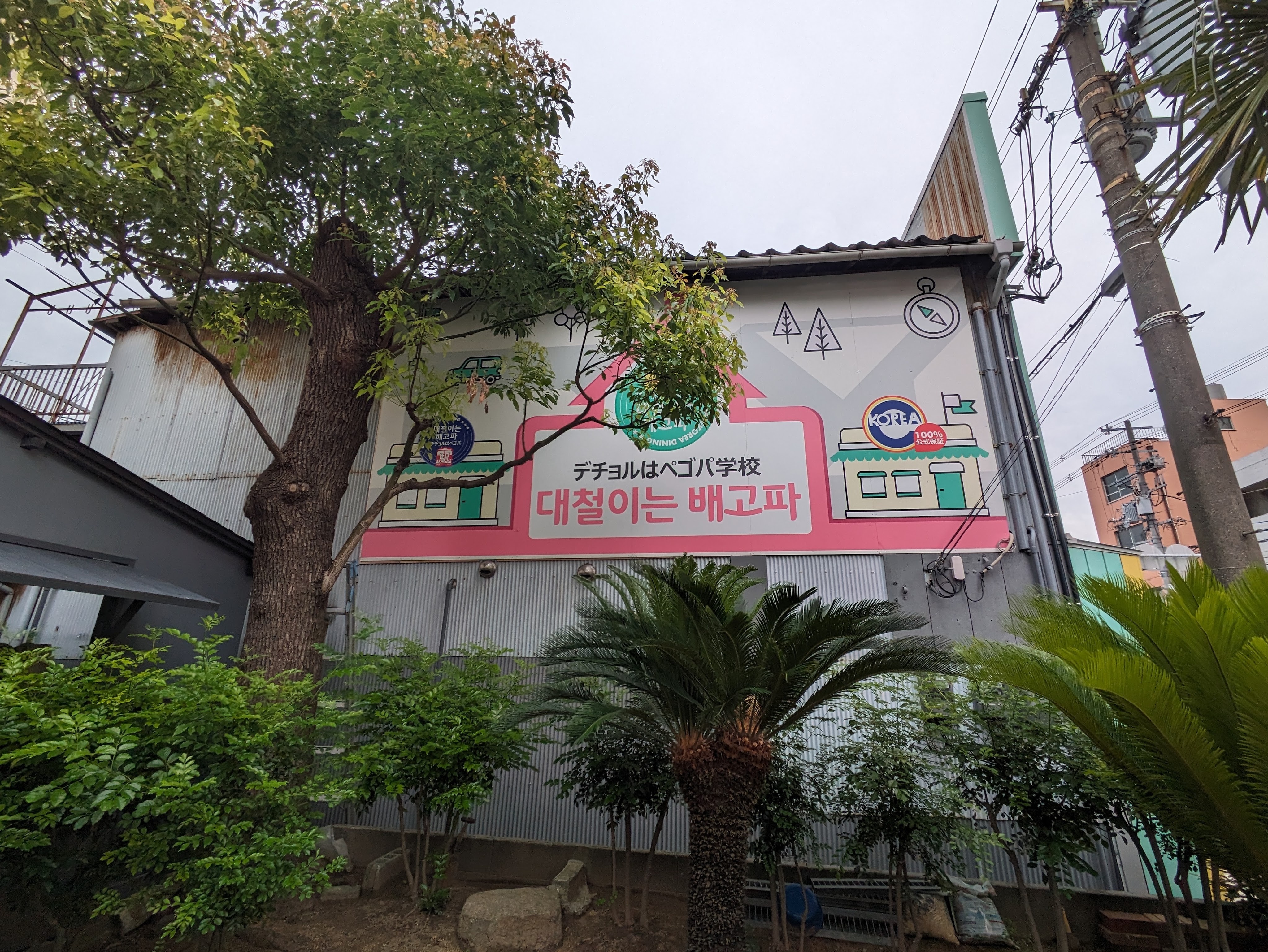
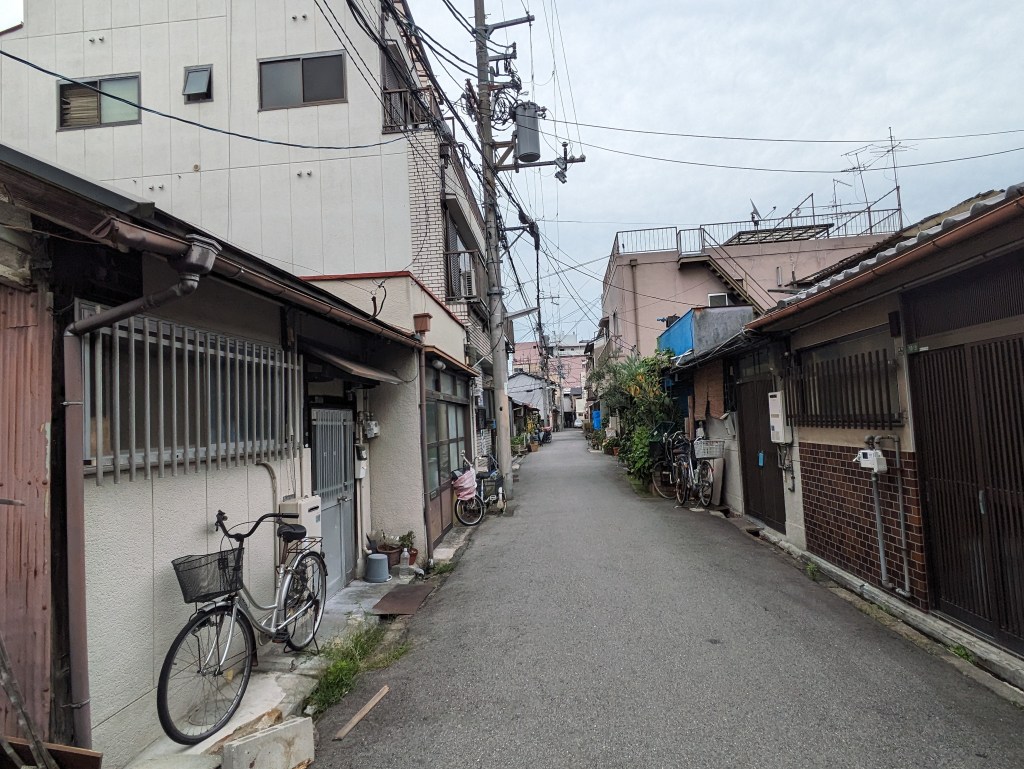
The shopping street gives way to narrow back lanes and a quiet neighbourhood. Signs are displayed in Japanese and Korean. Children play in the park, some folks relax on the bench, while others cycle to the large supermarket close by. There may be throngs of tourists in the parallel street, but this is their residence.


Access – short walk from Tsuruhashi Station on the JR Osaka Loop Line, Kintetsu Railway or Osaka Metro Sennichimae Line. More information here.
 Secrets from Japan and beyond