After World War II, Japan underwent a remarkable transformation. As the economy surged and the population expanded, the need for land became critical. With mountains covering most of the landscape, land was a precious resource. To accommodate the demands of modernization, coastal areas were subject to extensive reclamation projects. Rubble, industrial waste, and soil from construction sites were used to fill tidal flats, creating artificial islands for apartment complexes, ports, business centers, and factories—transforming coastlines across Japan.
In the Meiji Era, more than a 100 years ago, Koroen beach was a beloved expanse of sand and sea where locals loved to fish, swim, and relax. There was an amusement park and even a zoo. During the war, the area was destroyed, then painstakingly revived.
The writer Haruki Murakami grew up in the area. In an essay about his father, he recounts a memory from 1955, when they cycled together to Koroen Beach to abandon a cat.
“At that time, the sea had not yet been reclaimed, and the beach in Kouroen was a busy bathing beach. The sea was beautiful, and almost every day during the summer vacation, my friends and I would go swimming there.”
To their surprise, by the time they cycled back home from the beach, the cat had found its way back. In the end, they decided to keep it,
With economic growth came land reclamation and pollution. In 1965, the beach had to be closed. After that came the 1995 Hanshin earthquake, then more socio-economic challenges which continued to alter the area. By the 1970s, thousands of cars flowed along the road leading to the beach, with traffic accidents and thickening pollution casting a shadow over the area. As the surrounding land was reclaimed to make way for housing and new developments, it seemed the natural beauty of Koroen was being lost forever. But a shift occurred—a rare moment of unity between the government and the public, who stood against the tide of unchecked development. In a bold move, the road was closed to cars for a month each summer. The initiative proved so popular with the locals that it became a lasting tradition, a small victory in the battle to reclaim a space for nature.
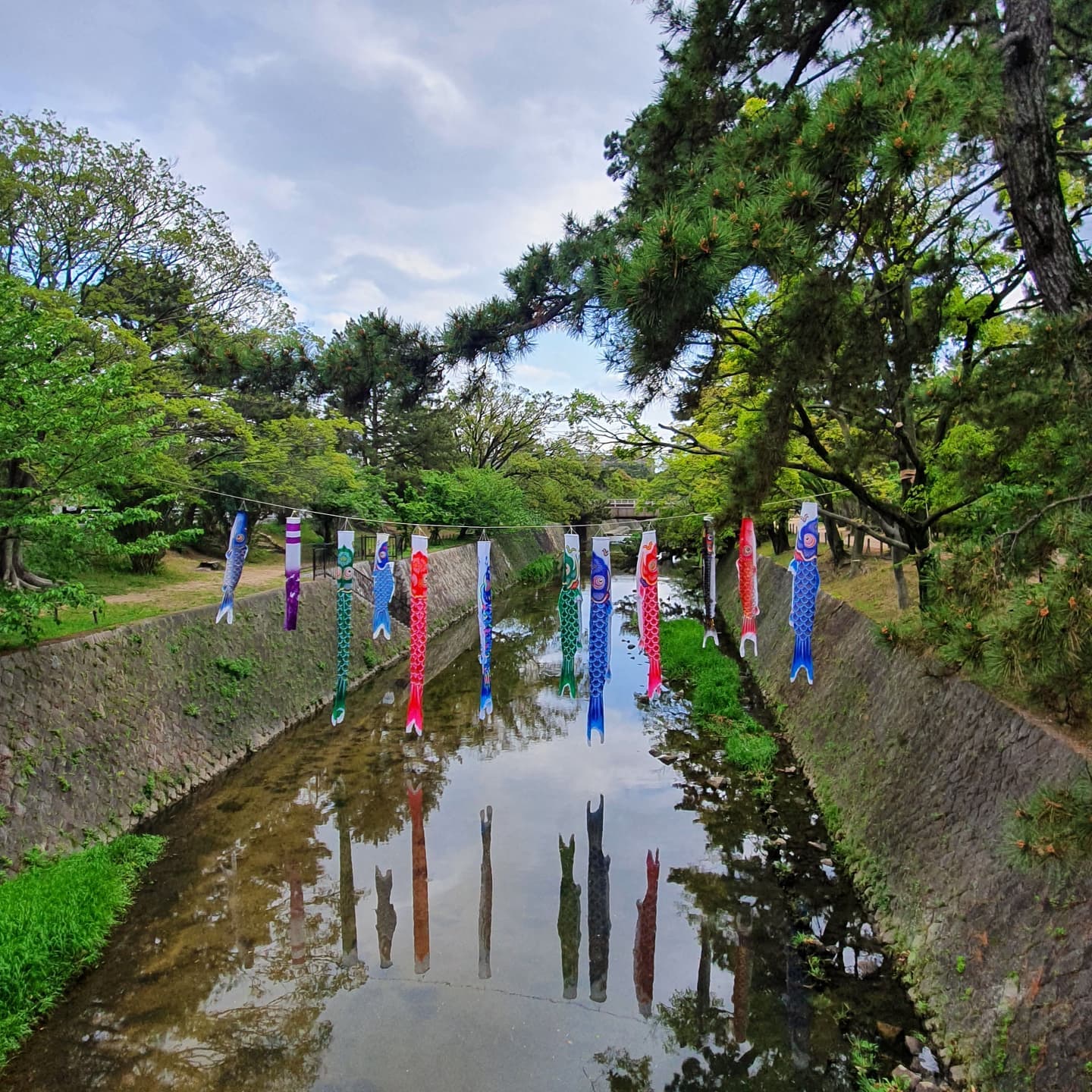
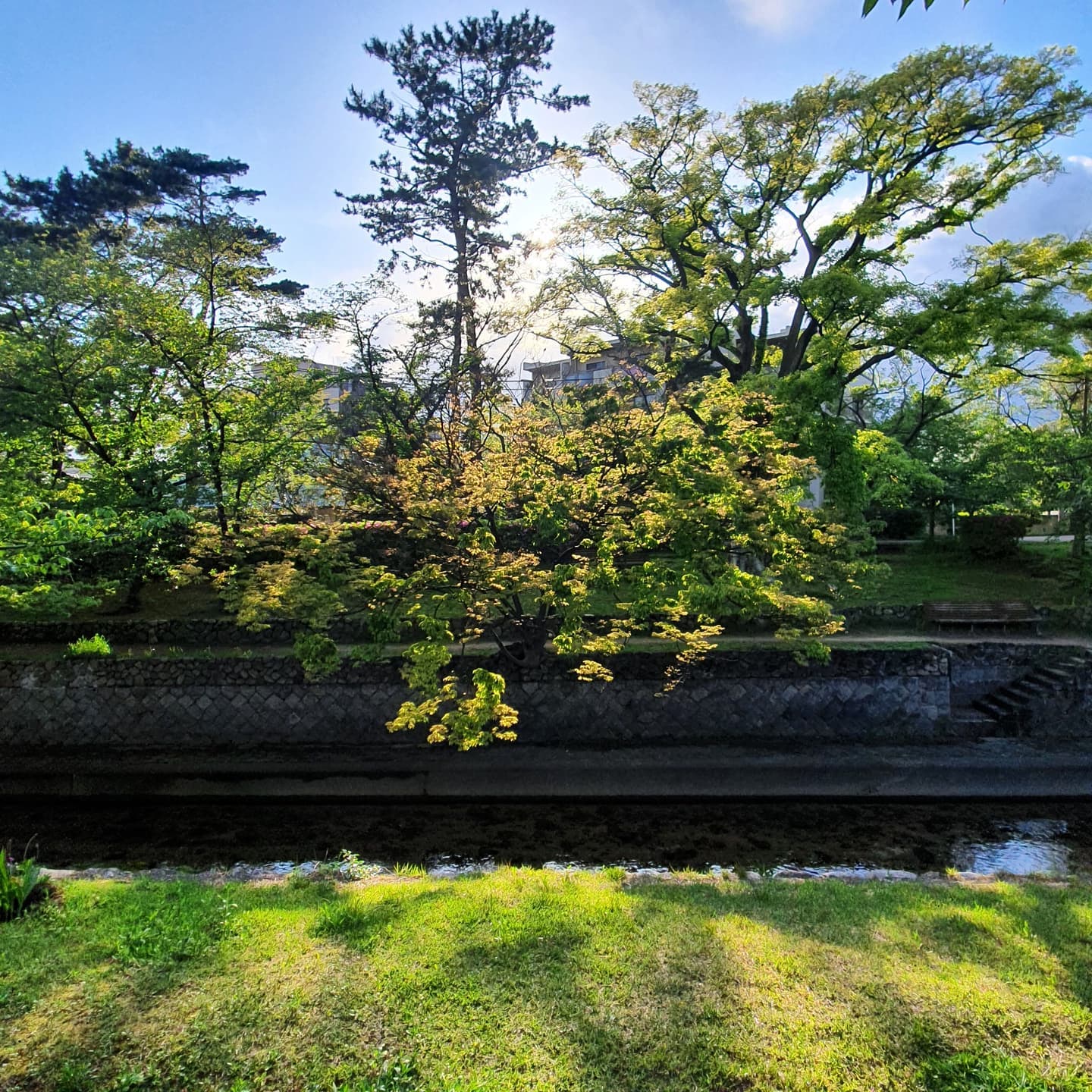
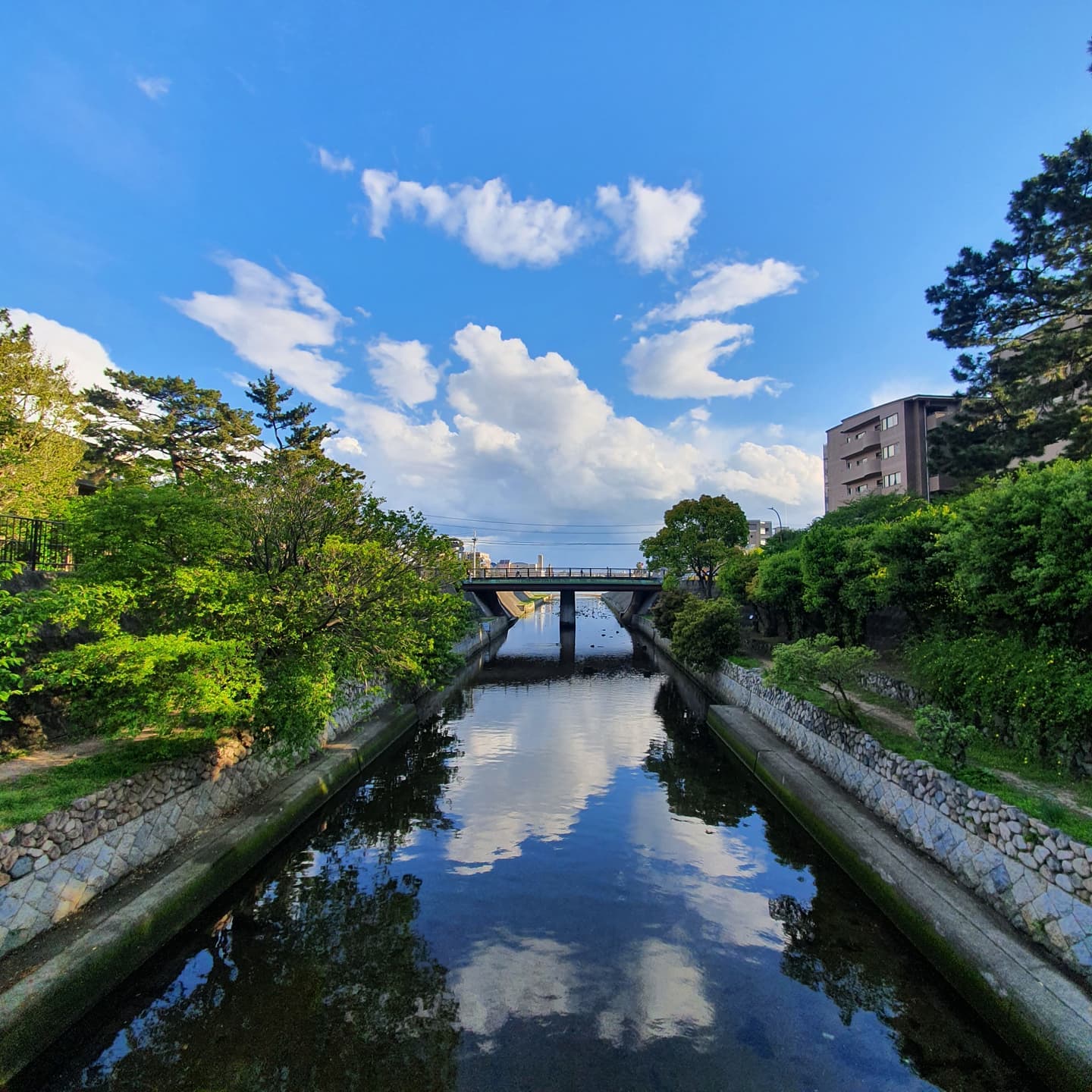
Today, past the busy motorway from Shukugawa station, the road turns into a large riverside road catering to pedestrians and cyclists. This is the Oasis road.
Famous for its cherry blossoms, in the spring, families come to take commemorative pictures. In the summer, cicadas buzz and flutter among the pine trees lining the path. As autumn and winter arrive, the bright skies and crisp air lend a contemplative calm to the road, while the occasional sunny day draws people out to bask in nature’s quiet embrace. Children pedal by on bicycles, laughter ringing out as they chat about the books they hope to borrow from the library nearby. The seasons turn, one blending into the next, and a sense of kinship pervades—a kinship not of mountain hikers, but of urban dwellers. This is a kinship of an urban people, reliant on the city for sustaining itself, guilty for the damage inflicted to nature on its behalf but still deriving strength and comfort from nature.
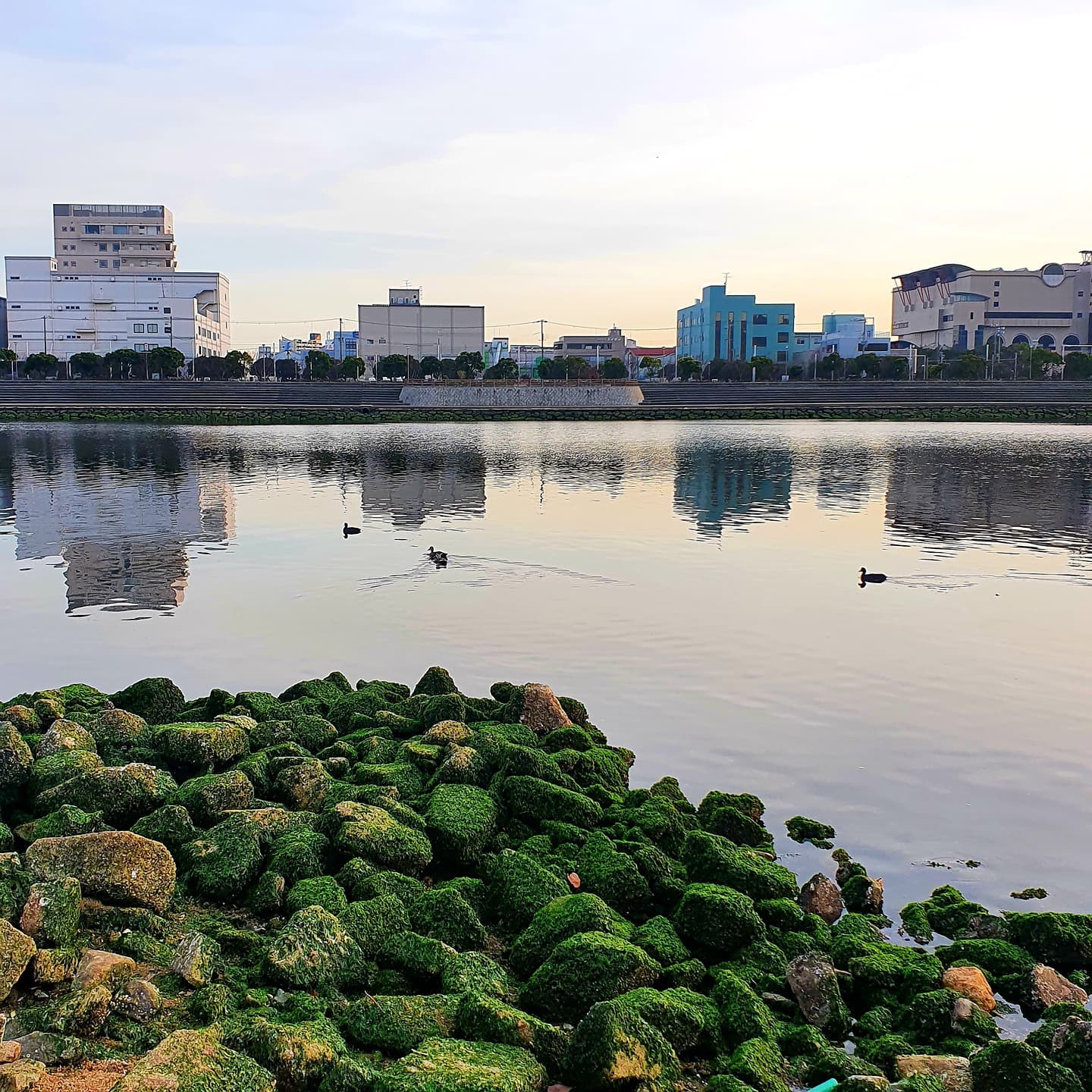
The river path ends on a road and beyond the road, lies the sea. The sprawling apartment complex across the bay looms as a reminder of the cost of progress, casting long shadows over the water. The urbanites become aware of their responsibility and part in the life they are leading. Then, a stork flies past, silver fish jump out of the water, hermit crabs scuttle past, and a turtle raises its head. The tide is changing. Nature is reclaiming its space. The modern urbanite, confronted with the resurgent space, is compelled not to take this for granted. The realization dawns that Oasis Road is a kind of miracle—a symbol of their shared responsibility to cherish and protect the fragile balance between the urban world and the natural one.
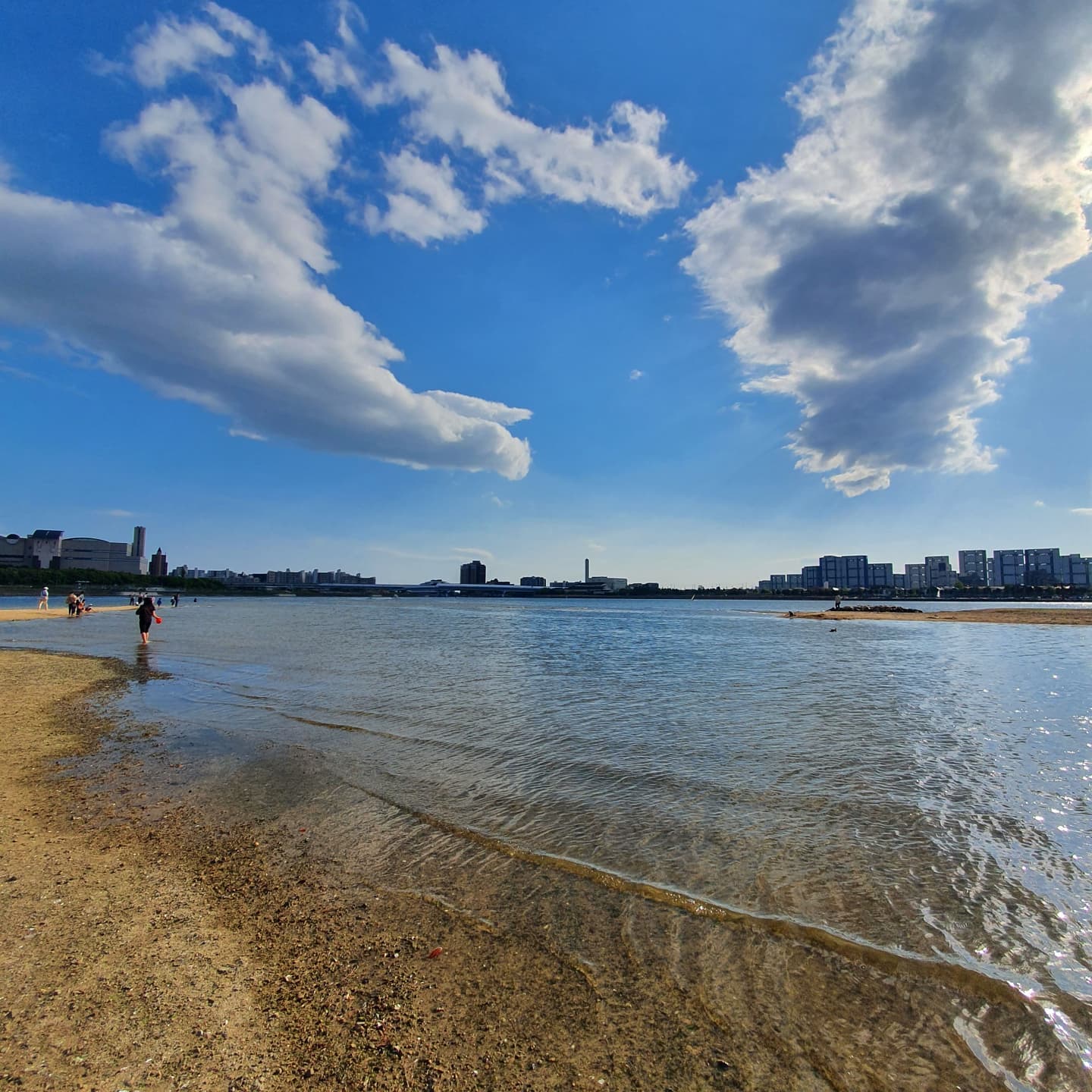
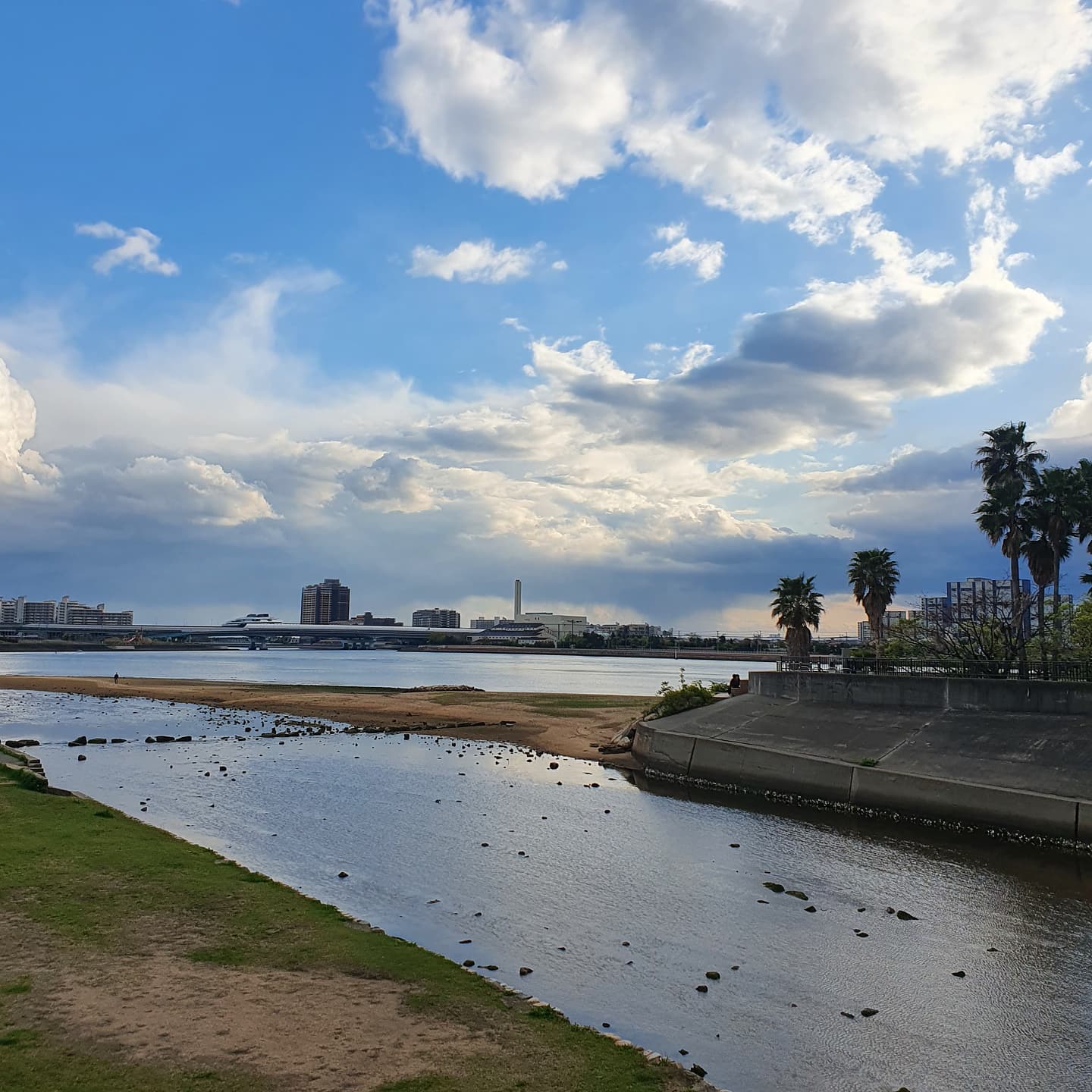
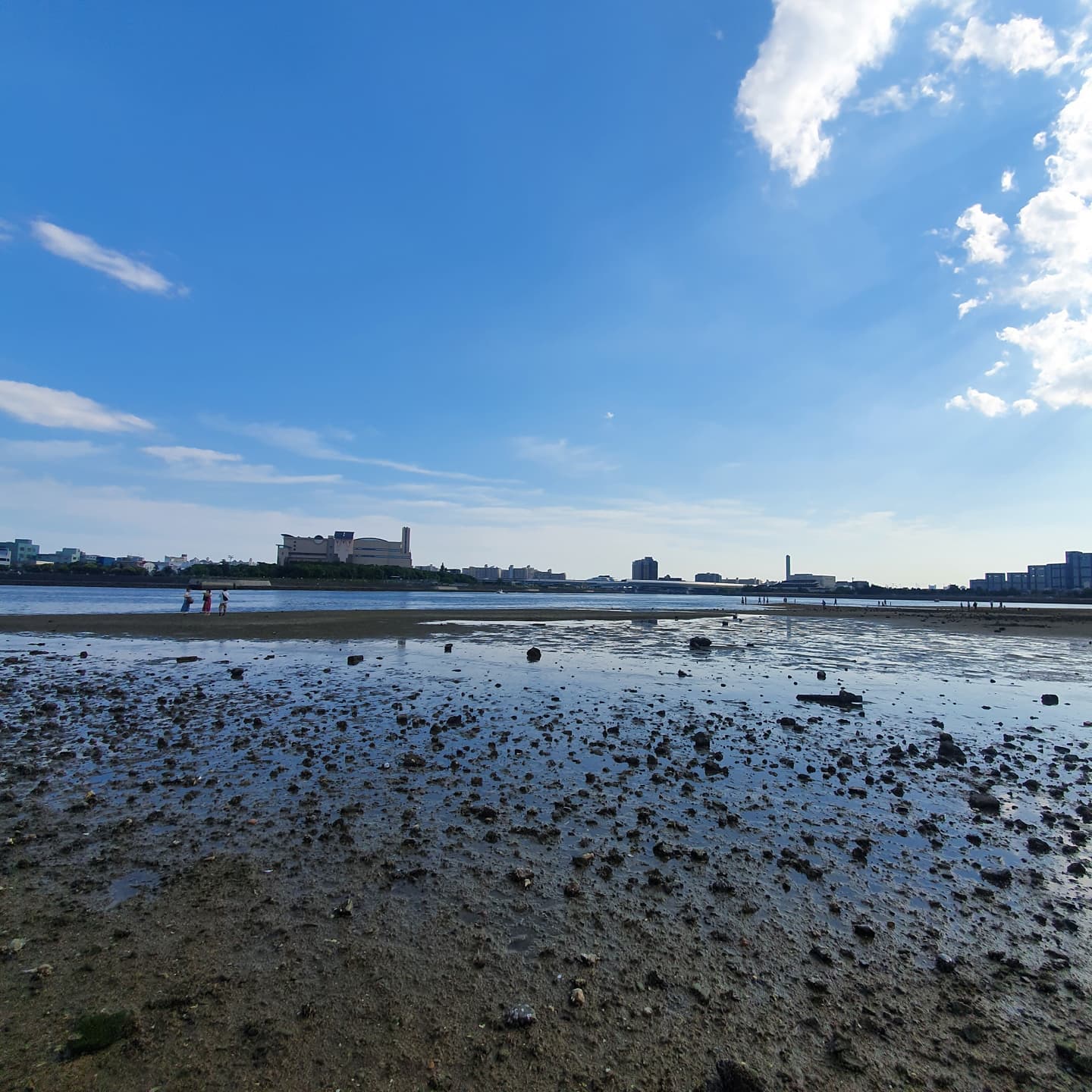
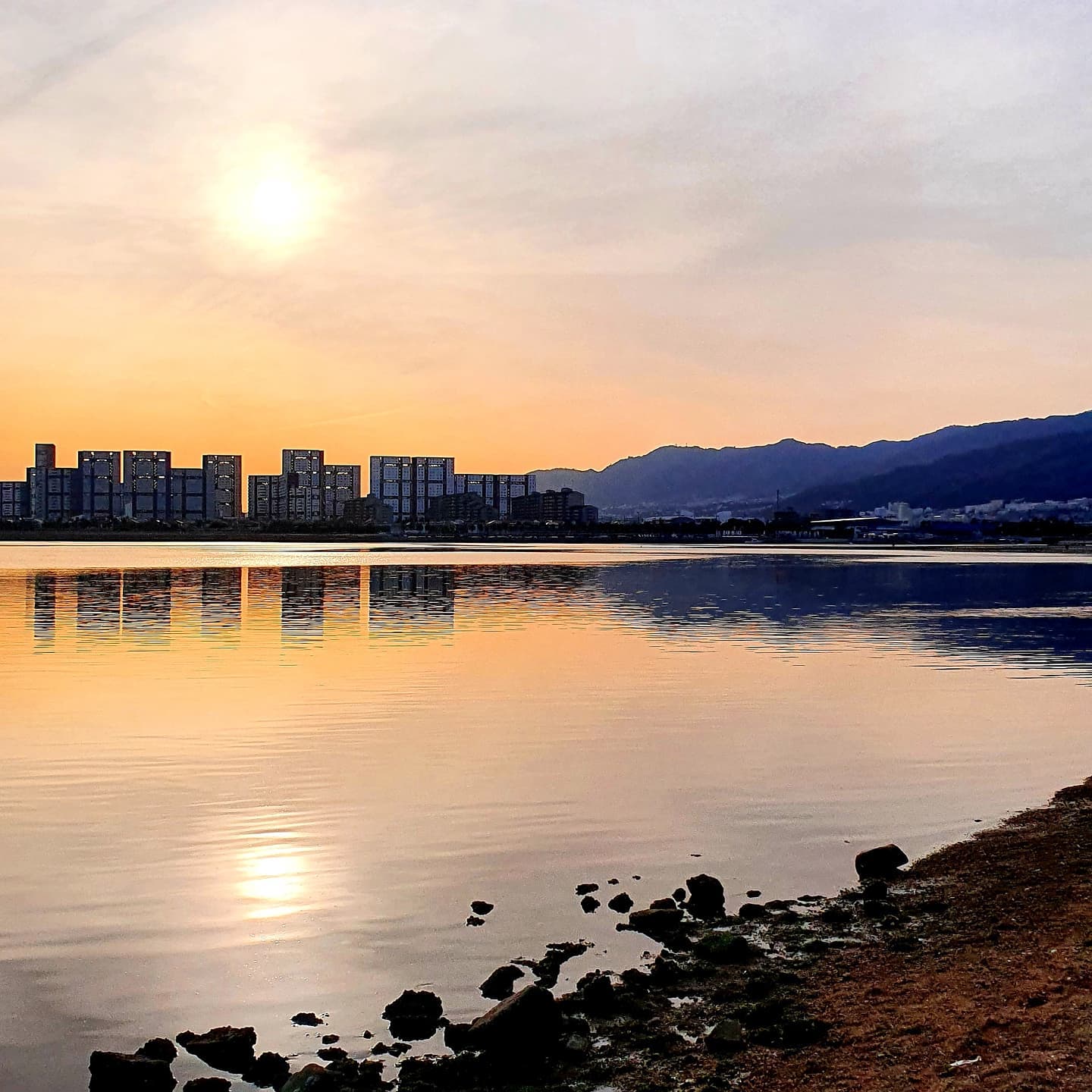
Access – Hanshin Bus, get off at Izumi-cho stop or Nishihato-cho stop. Or a longish but wonderful walk from Hankyu Shukugawa station. More information here.
selected reference
http://kouwan.pa.kkr.mlit.go.jp/kankyo-db/data/kankyou/kaiiki/umetate/b2_04umetate.aspx
 Secrets from Japan and beyond