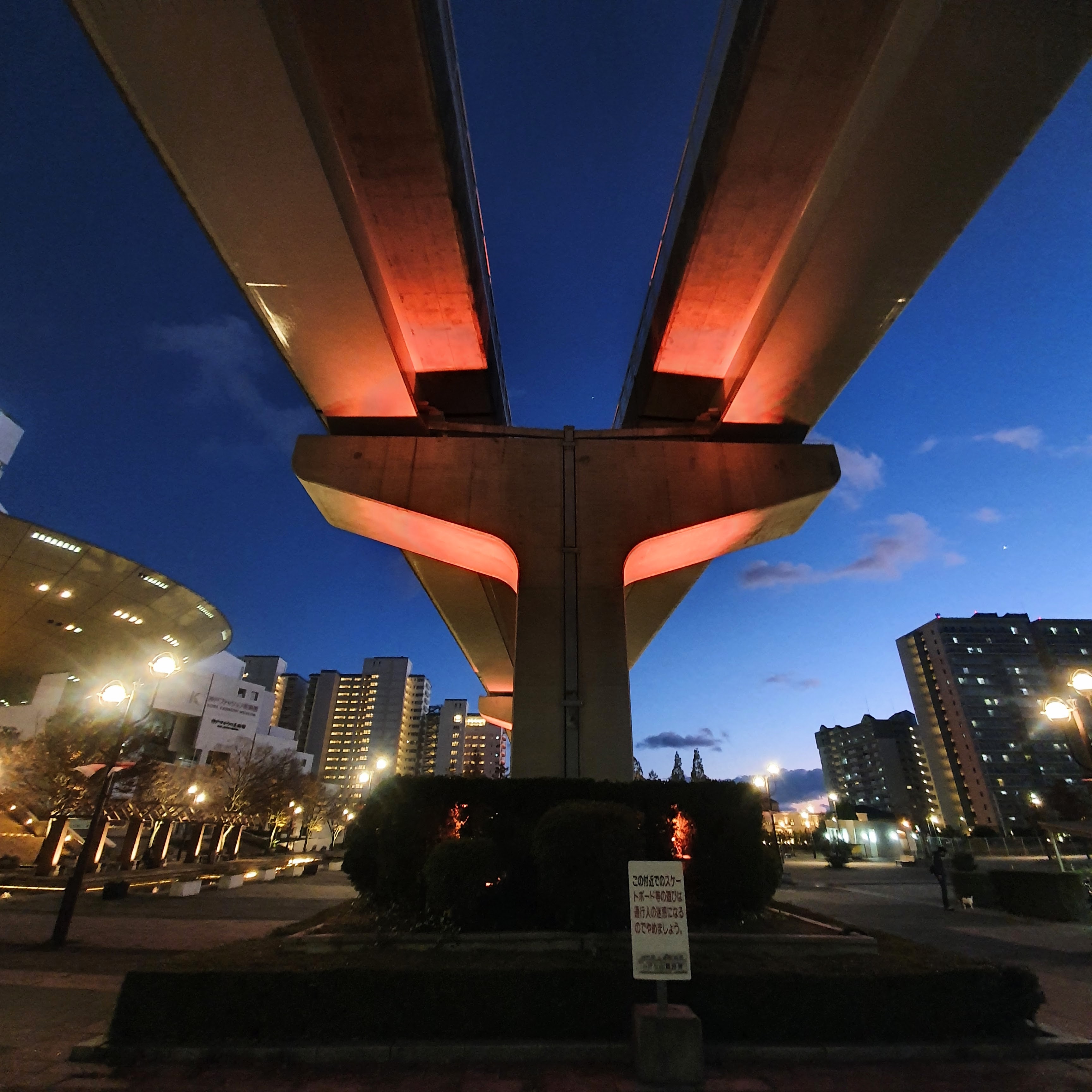
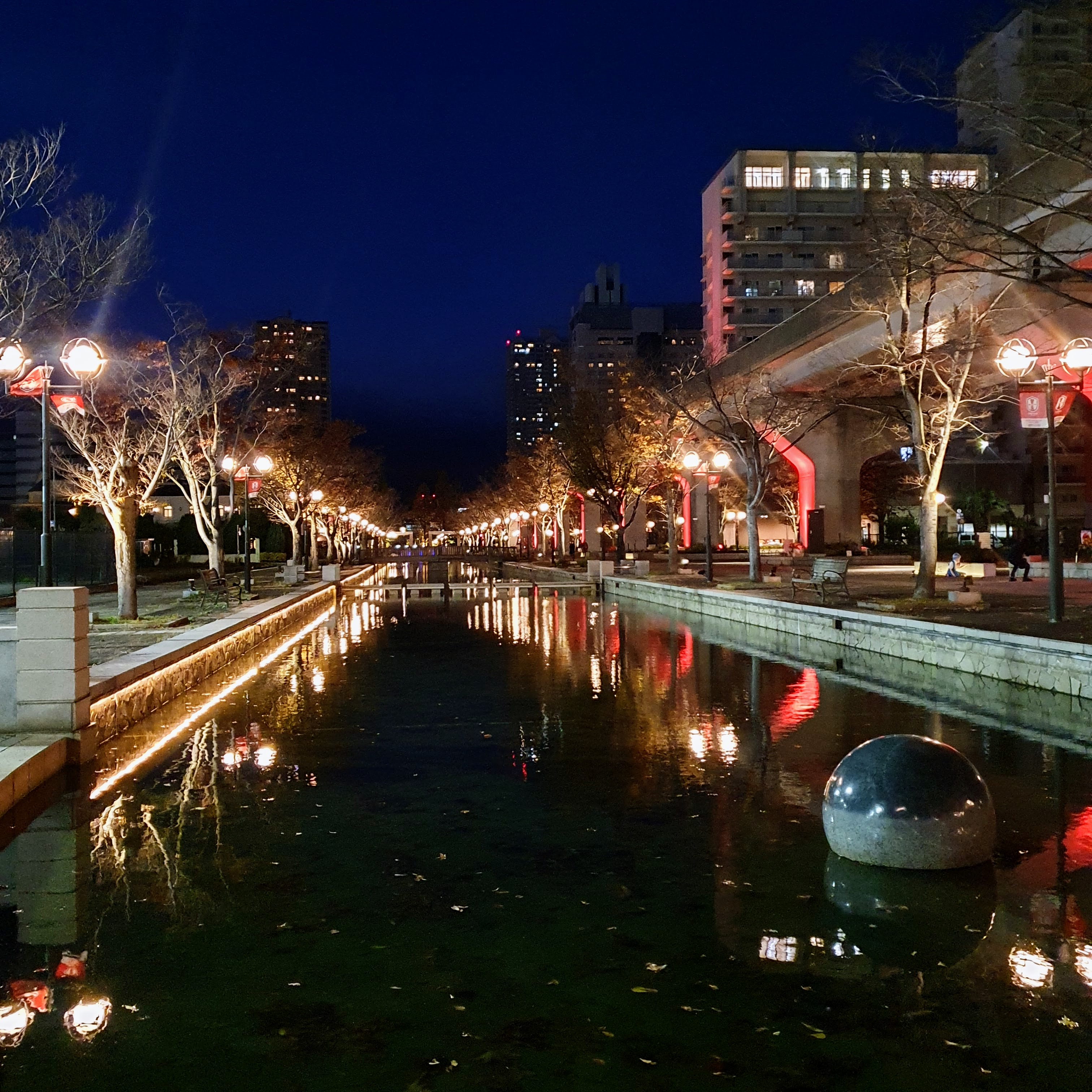
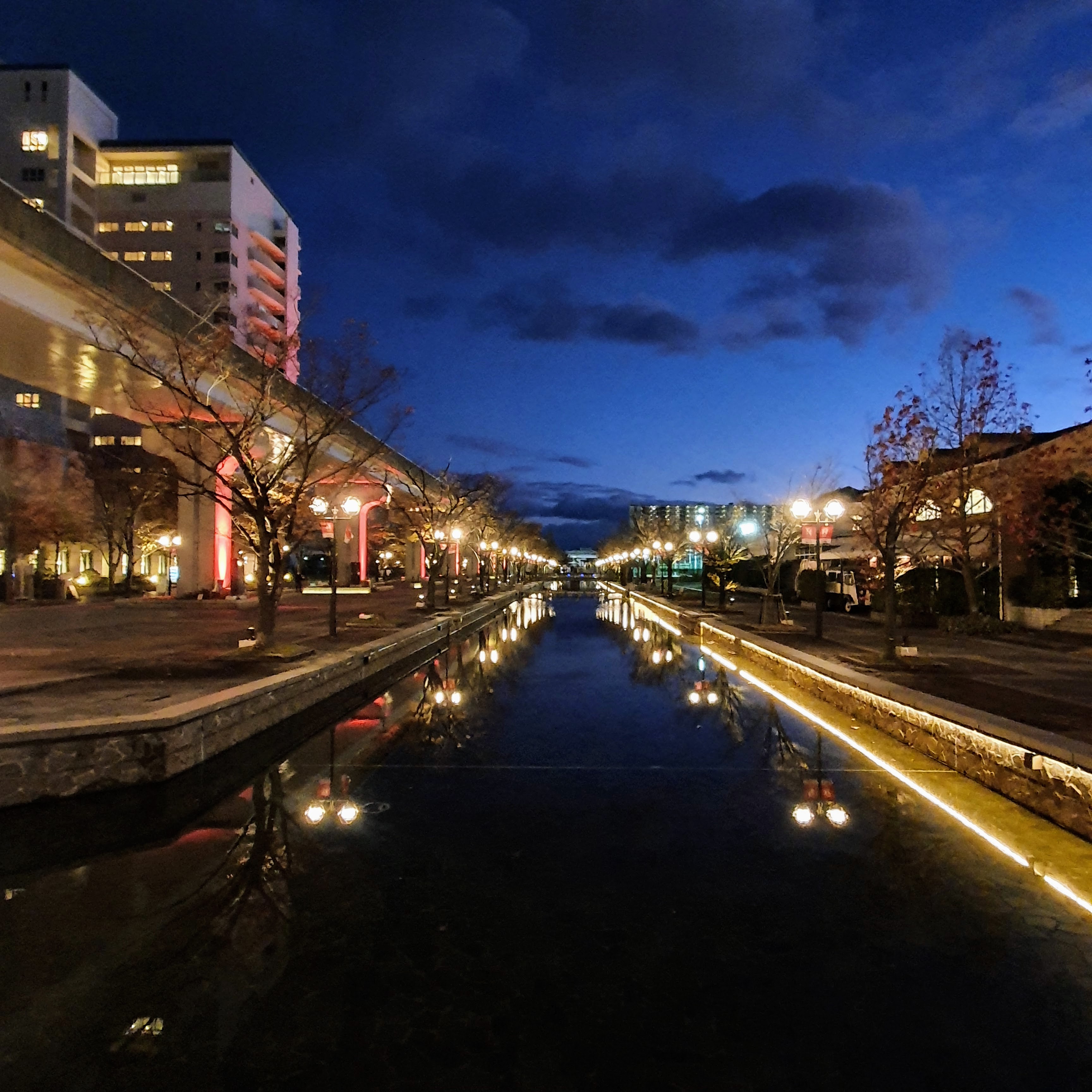
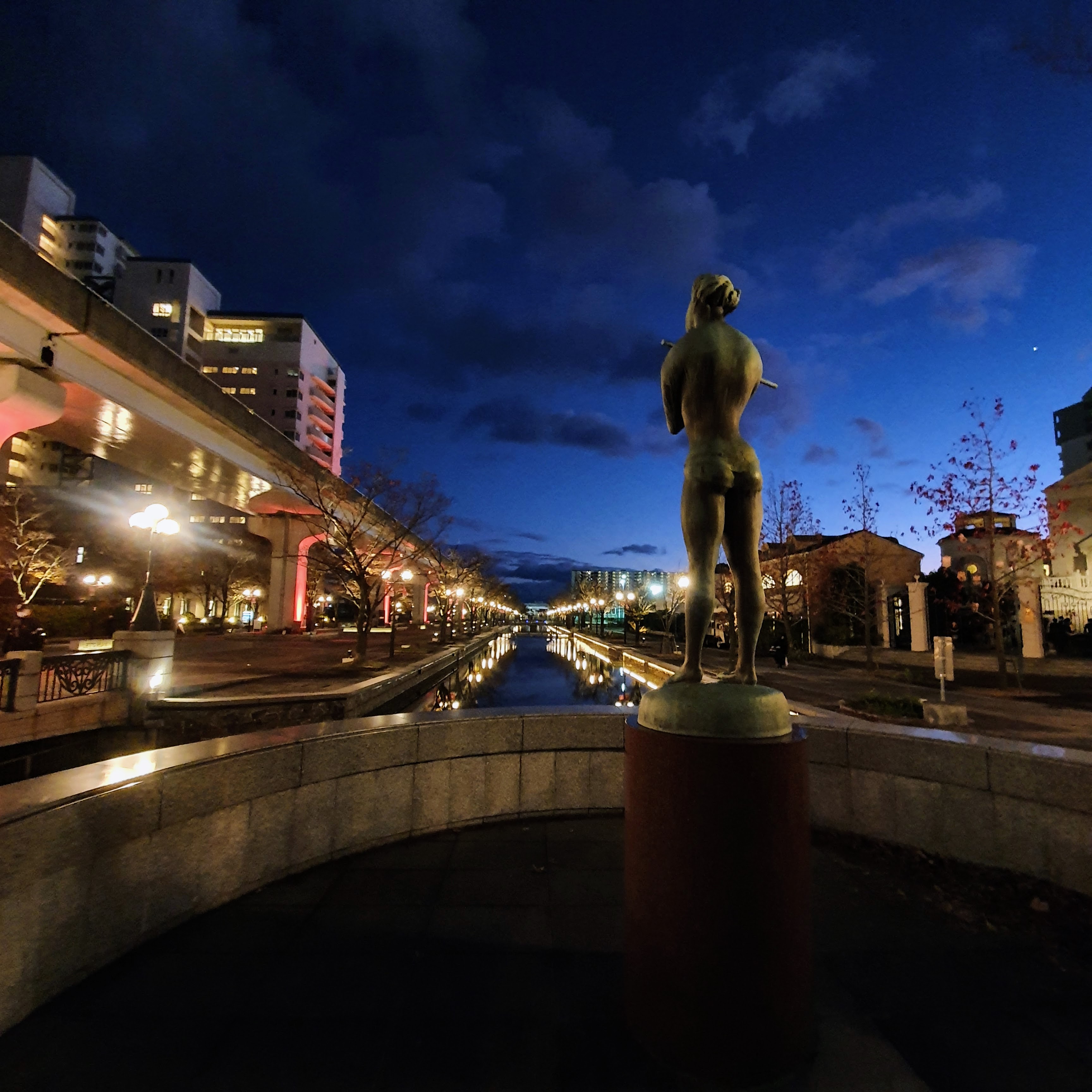
A shallow river runs through large towers of concrete and buildings shaped like spaceships. During the day, the water reflects the trees and the families walking past. At night, the lights of the buildings around shimmer on the surface.
To get to Rokko Island, if not driving, most take the Rokko liner, an automated transit train system. Rokko liner has an other worldly feel to it, as though it might have the ability to transit between the present and the future. If the future is a place where people build islands by digging up mountains, then Rokko Island is it.
The earliest known landfill in Japan is said to have been in 1173. The Tale of Heike, a military tale from the Kamakura period, mentions an island called Kegashima, built for the purposes of conducting trade. At the time, landfill was a dangerous affair and several lives were lost. It wasn’t until the Edo period when an explosion in population caused landfills to gain popularity again.
With Kobe’s role as a port city, the need for warehousing and other logistics related spaces led to an increase in land reclamation. After the world war, as Japan went through a period of rapid economic development, urban expansion put pressure on existing cities. In mountainous cities like Kobe where buildable land is scarce, a new concept of reclamation began to take hold. Reclamation began to be transformed from having a single function of reclaiming land to having multiple functions by creating a vibrant urban environment. Starting with Port Island, Kobe’s first artificially made island, to Rokko Island, city planners started aspiring to create maritime cities that would host residential housing, offices, hospitals, schools, and recreational areas.
Construction of Rokko Island began in the 70s. The mountains of Kobe were scraped up to provide soil and sand to build the island. Surrounded by the sea and port containers, it is divided into several zones – industrial, residential, and business – with a green belt in between. The island opened in 1988 and was expected to be a futuristic marine city, home to 30,000 people. For a while, Proctor and Gamble had its Japan head office here, and it was a magnet for expats. But the Great Hanshin-Awaji Earthquake brought with it significant change. Like the rest of Kobe, Rokko Island was also affected. Typhoons and heavy rains since have also had an impact on the surrounding port facilities. P&G moved its head office to the centre of Kobe city in 2016. Several shops, offices, and restaurants have since closed.
Although the island has seen decline compared to the original vibrancy when it was first built, it continues to be popular as a place of residence. Today around 19,000 people call Rokko Island their home. With international schools and comfortable housing, it is still popular with expats – business folk, baseball players, academics. Children from different countries can be found playing in the island’s parks and there is a prevalent sense of multiculturalism. The government is continuing to look for ways to revitalise the island, conceptualising development projects.
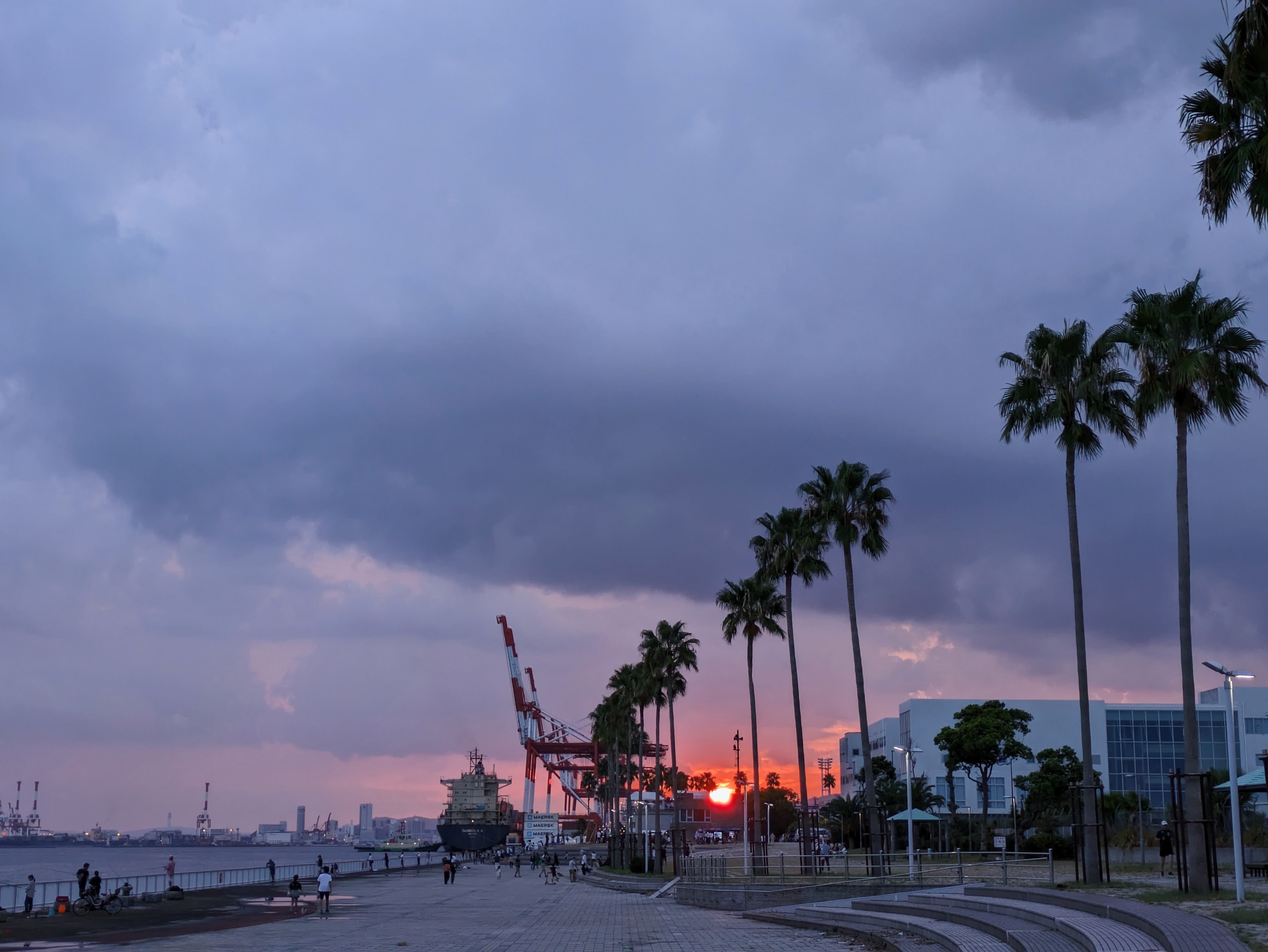
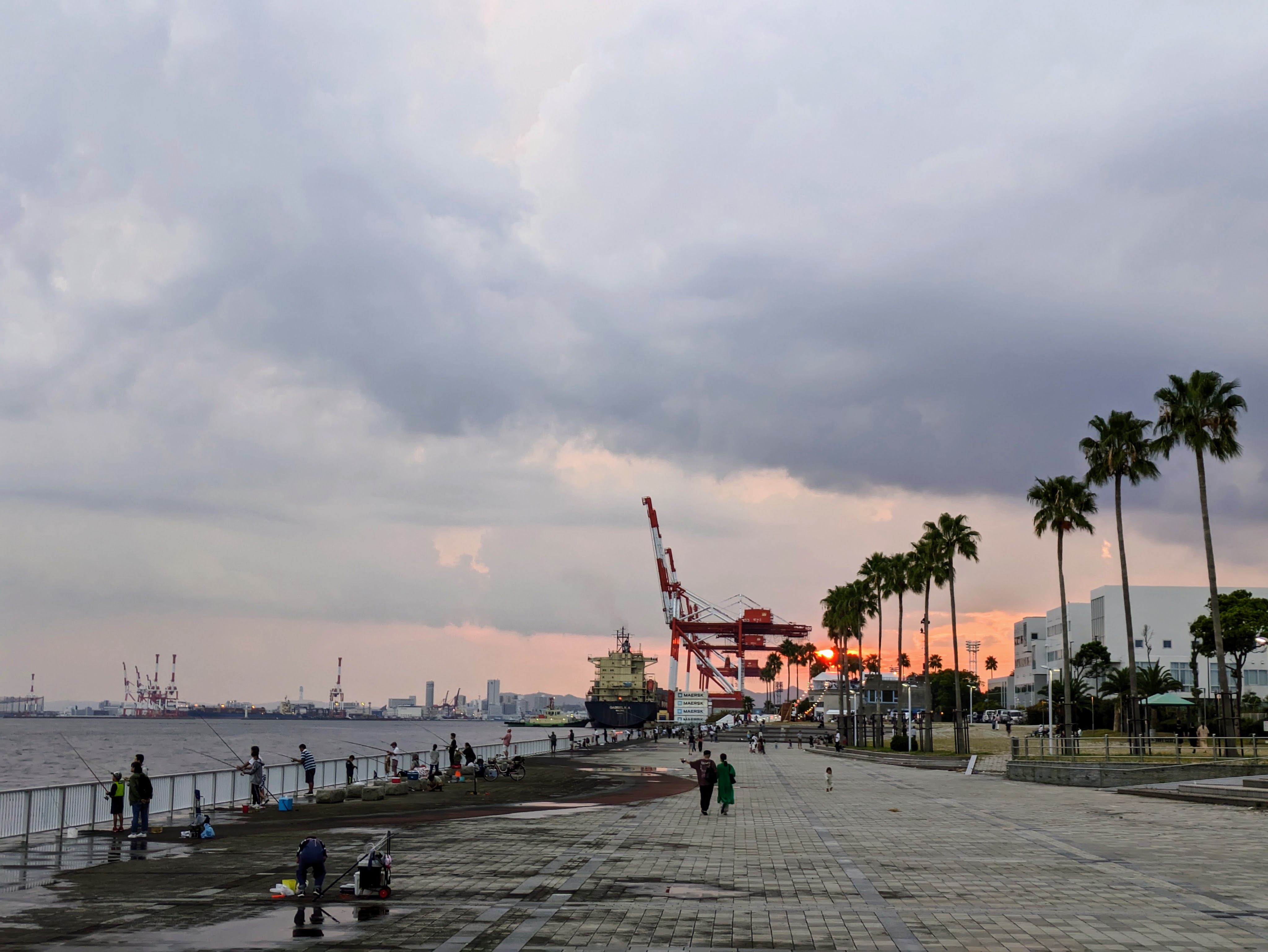
Rokko Island is bizarre and full of contradictions. The ground and the grass and the trees are made by humans, put here with deliberation, based on projects charted out by city planners. One wonders at the environmental impact of creating islands out of nothing, in the middle of nowhere. The sea is close by, but it is an industrial sort of sea akin to Osaka bay, with large containers and factories always looming in the distance. The island is part of Kobe, but separated, like an odd little suburb. On the other hand, the streets are wide and there isn’t much traffic. Families may miss the convenience and variety of a complete city like Kobe or Osaka but find the area safe to bring up children.
Real estate agents often describe the island as a resort. It is certainly compact, with its supermarkets and restaurants, a couple of museums, and so on. If one really needed to, it is possible to survive completely on the island without going elsewhere. The Rokko Liner accentuates the feeling that one ended up here by chance after having been given a ticket of sorts to arrive here.
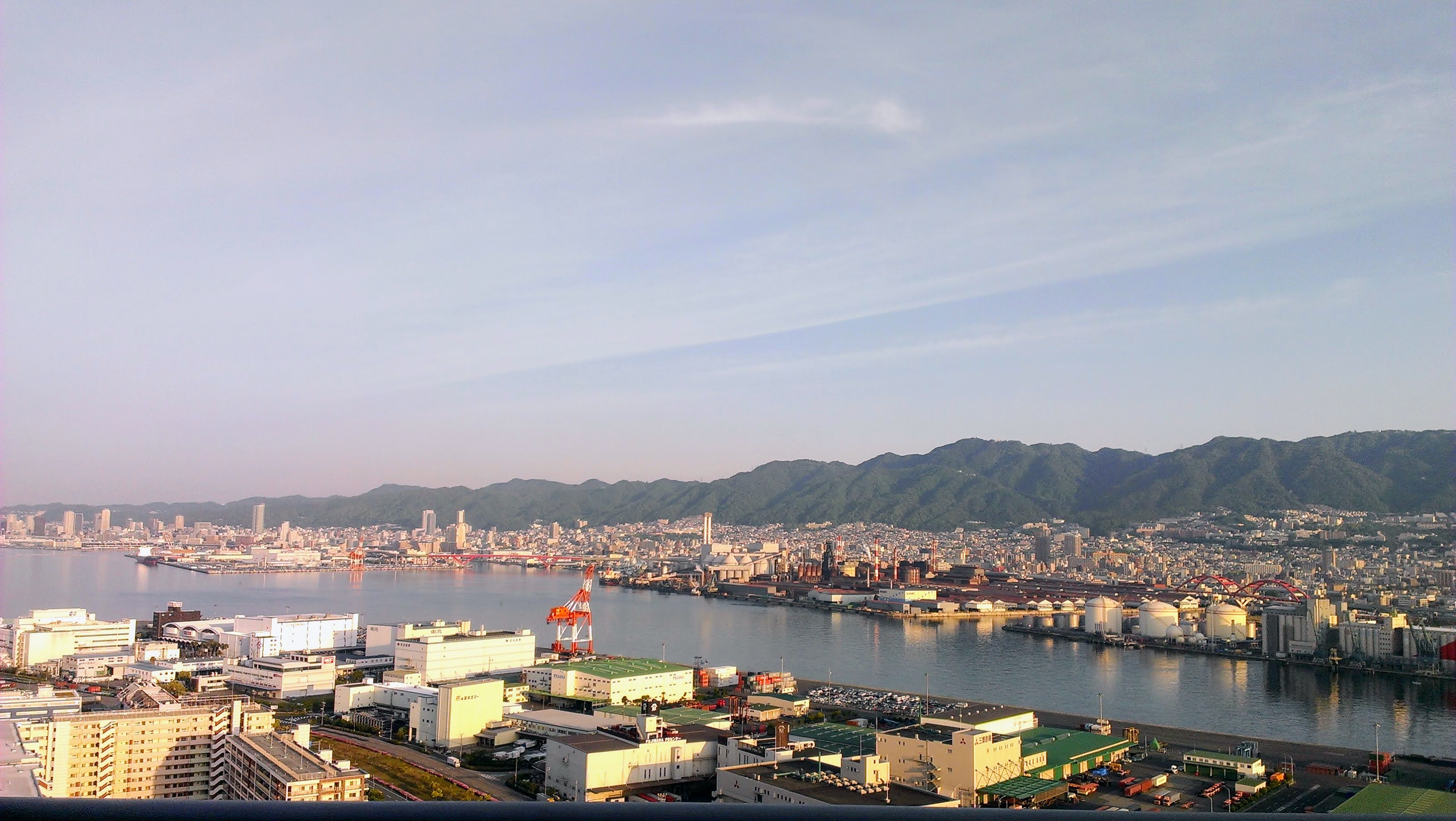
The island is bizarre but it is also equally fascinating. The sun sets on the industrial sea like any other sea, and lights up the harbour. From the top of any of the numerous high rise apartment blocks on the island, one can gaze upon the entire expanse of the port of Kobe – sparkling blue sea, green mountains, and red and white cranes on factory sites adding contrast to the landscape. It is an artificial island, but it has been around for more than three decades, and nature has found its way here too. It is hard to imagine that all the residents of Rokko Island fancy the idea of living in a resort. But perhaps many of them recognize the privilege of being able to inhabit another world, a new world, made just for them.



Access – Take the Rokko Liner train from JR Sumiyoshi station in Kobe. More information here
 Secrets from Japan and beyond