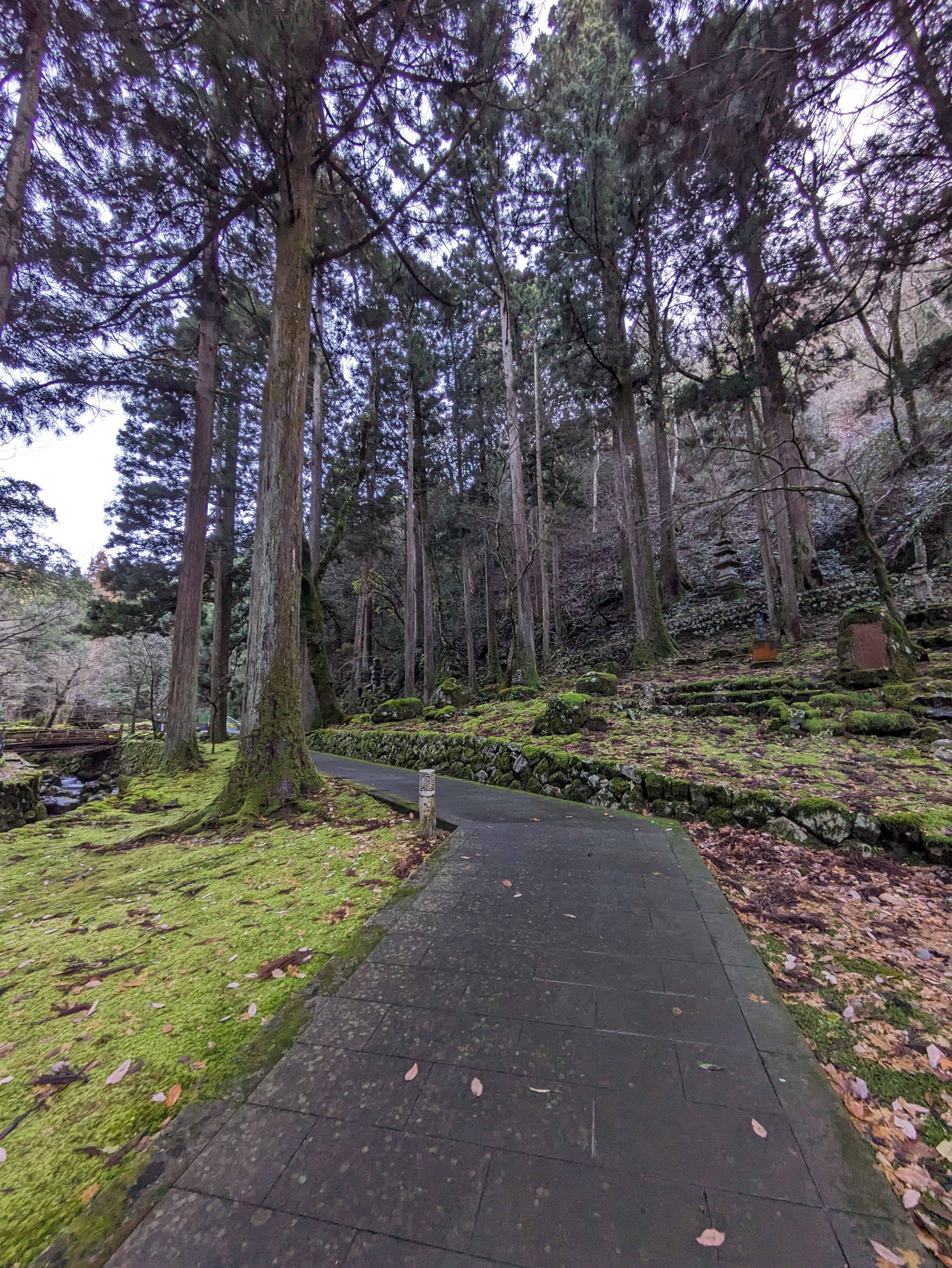
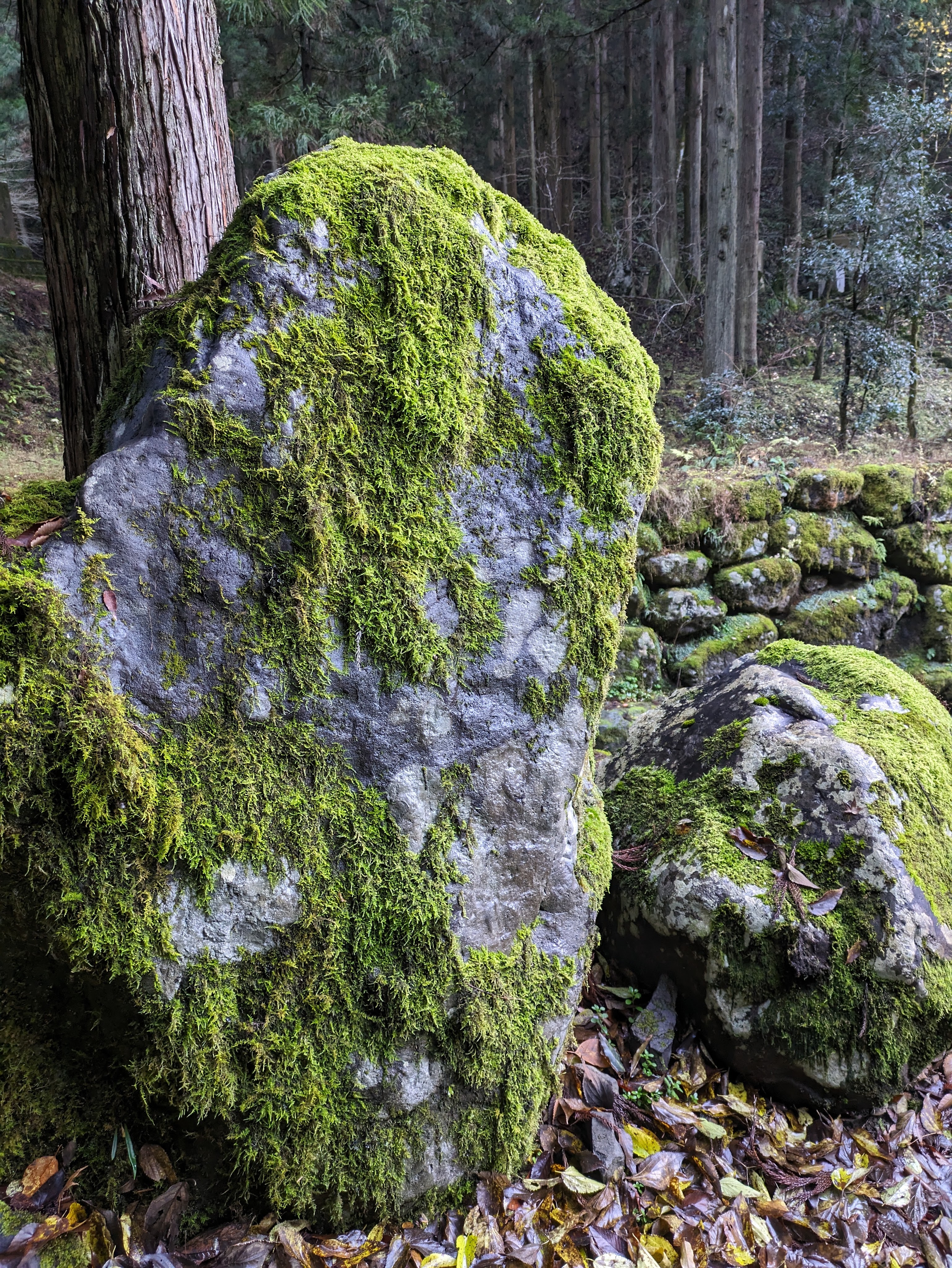
The cedar trees in Eiheiji are large, expansive, and over 600 years old. They stretch out far into the sky, sunlight filtering through the branches creating shadows and patches of light over the moss laden path. The cedars are guardians to this sacred forest and temple, exuding the capacity of being able to accept anything.
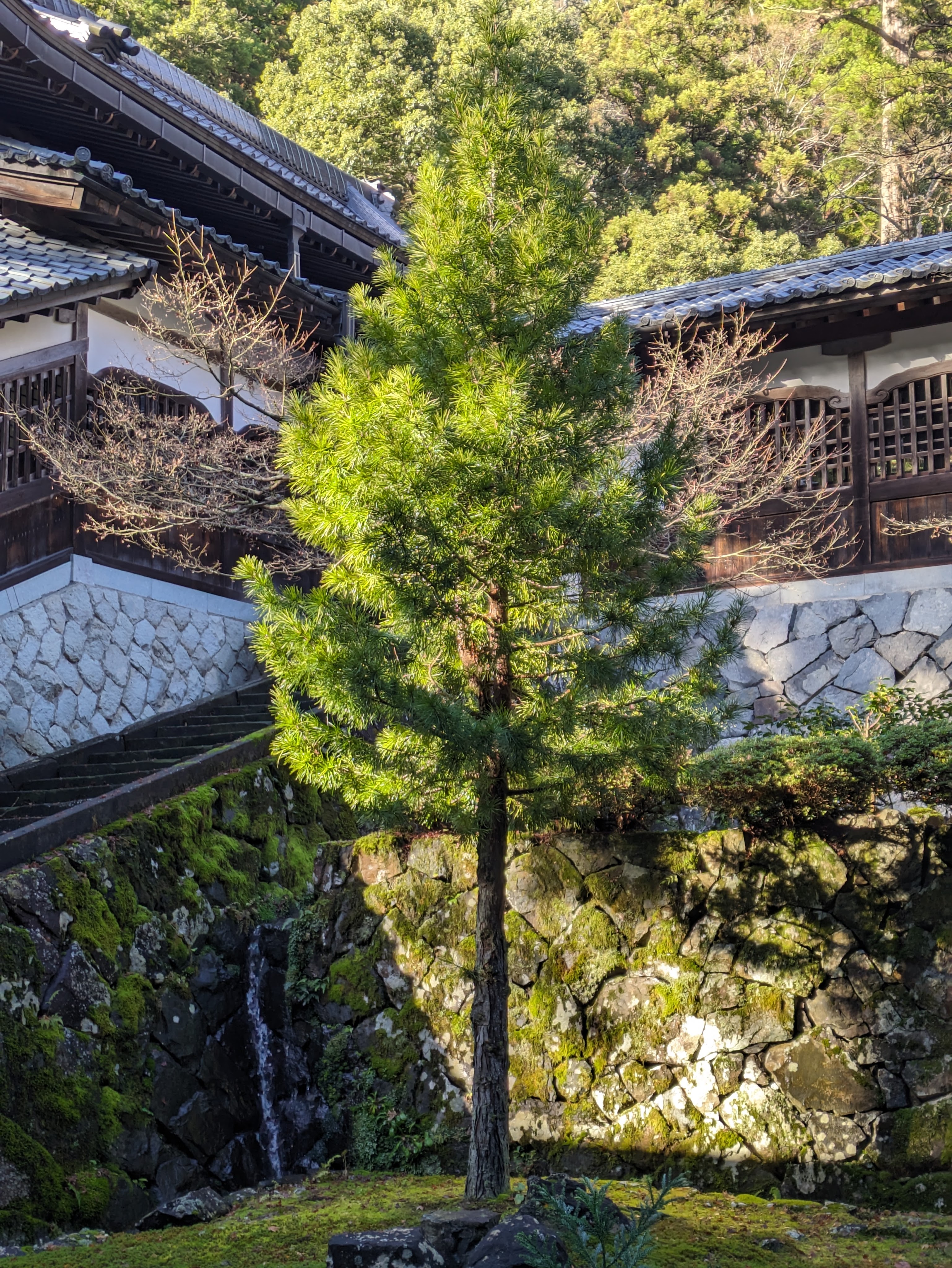
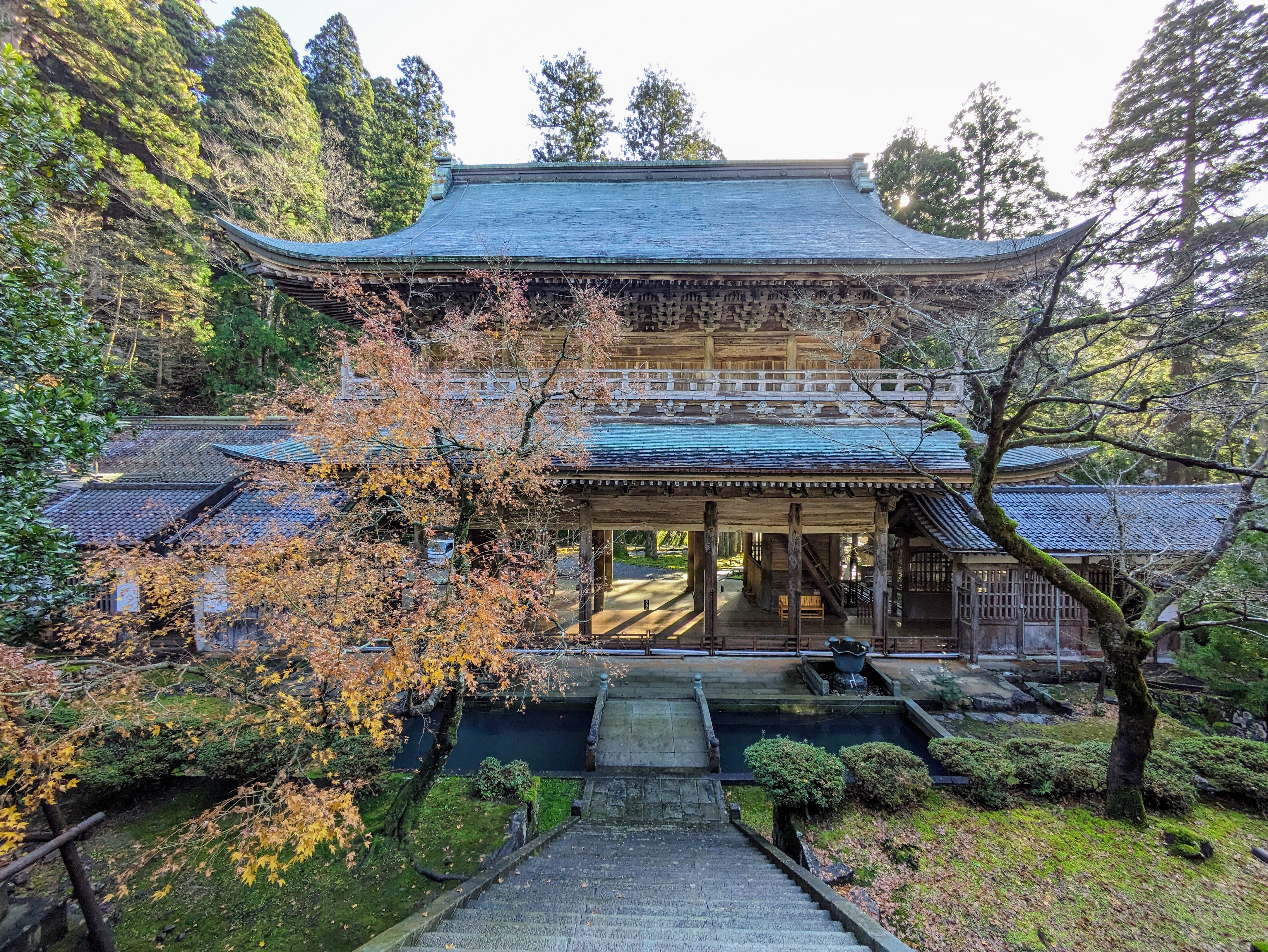
In 1244, the Buddhist priest, poet, and philosopher, Dogen arrived here dissatisfied. He had been studying Buddhism in Kyoto, then been on a trip to China, seeking answers to questions about his faith. On his return, the mountainous countryside of Fukui offered a quiet place for contemplation. He founded a new sect of Buddhism with its head temple in Eiheiji — the Soto sect, now the largest of the three traditional sects of Zen Buddhism. A large gate, made without any nails or fittings, separates Eiheiji from the outside. Monks are allowed to pass through it once when entering the mountain and then again when exiting the temple after the completion of their training. Inside the temple, the large wooden stairways are stifling — silence and muted footsteps. Monks are gathered in the Buddha hall in front of the statues of the three main principal Buddhas symbolizing the present, past and future. They chant various prayers as visitors queue up to offer rice grains as an offering. With prayer and chant, the air comes alive once again, clearing the stifling feeling and allowing one to breathe.
There is a certain appeal to places separated from the mainstream and the urban — private boarding schools, a cottage in the countryside, a distant country, a Zen temple in the forest. These are places that conjure up an invitation to kindle one’s imagination to consider alternate paths. Although those exercises may be pleasurable, it is certain that the dreamlike existence one imagines contains realities too.
Eiheiji is a place for spiritual education and focus. 200 or so monks and nuns live and train here. Their daily lives are built upon discipline. They wake up at four in the morning, sit facing the wall and do zazen for hours on end — a practice of meditation where one sits and lets thoughts and imagery come and go without being affected by them. Thinking about nothing is difficult and so if your mind is led astray, it is acceptable to seek assistance. Attending monks come and tap you on the shoulder with a stick if you so desire, a tactic to nudge one into a state of concentration. Dogen’s central belief was built upon the idea that enlightenment in itself is not something to be desired, but is manifested through consistent and continuous zazen meditation.
Putting aside the aspect of spiritual growth, non attachment and a separate existence focusing on training one’s own mind and body may seem like an escape from wanting to be human. In George Orwell’s essay, ‘Reflections on Gandhi’, he writes, ‘If one could follow it to its psychological roots, one would, I believe find that the main motive for ‘non-attachment’ is a desire to escape from the pain of living, and above all from love, which, sexual or non-sexual, is hard work.’ The reasons for one to become a monk at Eiheiji may be varied. Several may do so because their family runs temples. Some others may have been inspired by the teachings of the Soto sect. In essays and interviews in Zen blogs and magazines, monks talk about how strict the training at Eiheiji is. It is often considered one of the most strict Buddhist training regimens in Japan. But on the other hand, some monks also find things that they resonate with in their training, such as the importance of conducting daily actions with consciousness. One monk is descriptive about the nature found around Eiheiji, of the wild vegetables that are harvested around the temple — mugworts, yam, Japanese pepper — served as tempura with udon noodles for dinner.
The ceramics artist Tanaka Sajiro started his career as a motor boat racer, then discovered Buddhism and pottery in his late twenties, and went to Eiheiji to train in his late thirties. Now in his eighties, he was recently featured on the NHK radio program, ‘religion time’. He talked about his remote life living on a mountainous cliff in Kyushu, and about the influence of Zen on his relationship with work, ‘I don’t have a television so I just spend all my time working, making pots.’
A regular visitor to Eiheiji may not be training to be a monk or a potter. In this almost liberated state in a place of quiet, and then upon return to that other life, the one that ebbs and flows with external distractions, internal challenges, and other mortal inhibitions, how then, ought a passenger of the modern world to find the balance, to get to the essence of something, to push oneself to the slightly elevated version of oneself as a daily practice? Is it through daily chores, or through snatched slots of meditation? The answer may change for each one, and may not even be found in spirituality. It may lie hidden somewhere in the literature, the conversation, the actions of those around, the subtext, the realms of a vast world. It may not even be a singular answer, but an entire, ongoing process that needs nurturing and self acceptance. In his spiritual book, ‘Let your life speak’, Parker J. Palmer writes, ‘My life is not only about my strengths and virtues; it is also about my liabilities and my limits, my trespasses and my shadow. An inevitable though often ignored dimension of the quest for “wholeness” is that we must embrace what we dislike or find shameful about ourselves as well as what we are confident and proud of.’
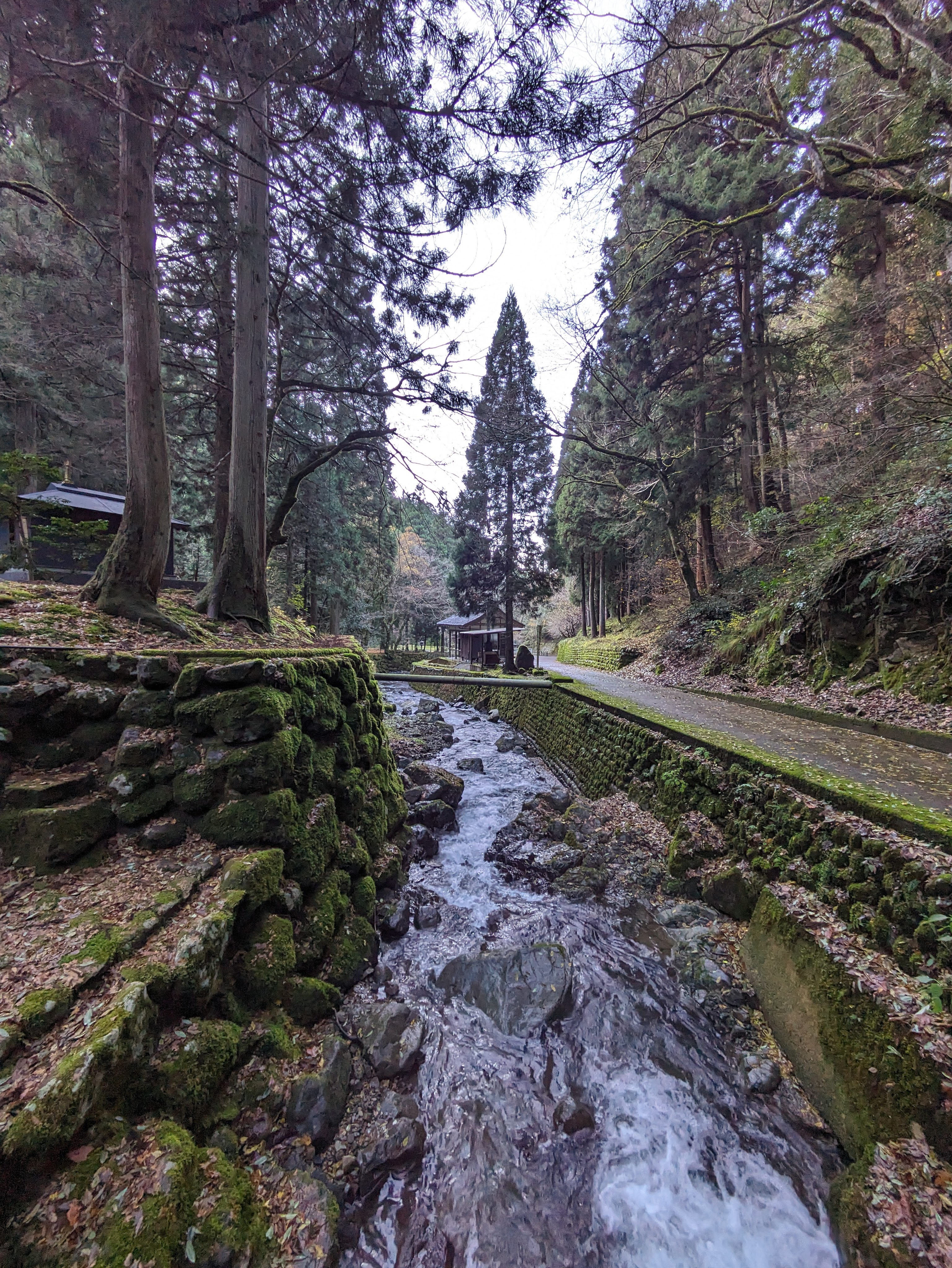
The river outside Eiheiji is white and black against the large rocks on its banks. Thousands of people have walked through this path surrounded by ancient cedars to visit Eiheiji, and thousands more will walk through it. A small orange and black bird, a redstart, calls. Is he calling for his mate or has he discovered food or is he simply practicing his call? To you, his call is unfathomable but joyous. It brings forth three suggestions to your mind — be gentle, be patient, and don’t forget to practice.



Access – Bus from Fukui station. Find more information here
 Secrets from Japan and beyond