Fire, essential to life, has been considered sacred since ancient times. The kitchen, where fire is handled, has traditionally been viewed as the heart of both the home and business. A bustling kitchen, filled with warmth, is said to signify prosperity, reflecting the belief that fire is a symbol of vitality. In Japan’s South-central region of Kansai, this belief is embodied in the ancient temple, Kiyoshikojin Seichoji, located in Takarazuka City, 30 minutes from Osaka. Dedicated to Koujin, the god of fire and the kitchen, the temple is often called Koujin san, and blends together elements of Shinto and Buddhism.
Buddhism, which originated in India, was introduced to Japan by way of China and Korea in the 6th century. As Buddhism spread throughout Japan, it didn’t replace Shinto but was instead integrated into it. It became common for Buddhist temples to be built next to Shinto shrines, with the two religions coexisting in the same sacred spaces. Some sites even had dual roles, with priests conducting both Buddhist and Shinto rituals. Shinto gods were sometimes interpreted as manifestations of Buddhist deities. The identity of the deity Koujin was developed within Japanese Buddhism, merging elements of ancient Shinto, esoteric Buddhism, and mountain worship. This coexistence went on till the late 19th century when Japan’s government sought to modernize the country and redefine its national identity. One of their strategies was to promote Shinto as the state religion and to place the emperor at the center of Japan’s political and spiritual life. By 1868, the government had implemented a policy to separate Shinto and Buddhism. But in present-day Japan, people often practice elements of both religions.
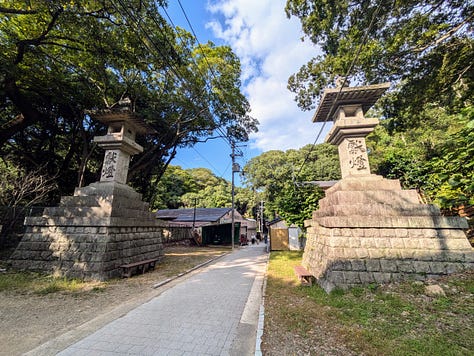
The road leading to Koujin san is known as “Dragon’s Road,” a gently sloping path that stretches for 15 minutes and is lined with hundreds of small shops offering everything from tea houses and udon shops to dried goods and souvenirs, creating the feel of a traditional temple town.
Walking up the path, one slowly forgets about the stresses of modern life. It gets quieter, and the surrounding trees offer shade and a green cocoon-like light. In local lore, this temple is notable as the place where Ohira Mitsuyo, a woman who famously transitioned from being a gangster to a lawyer, found her path to rehabilitation. Ohira is said to have visited the temple daily for several years, relying on the strength and peace it offered to transform her life.
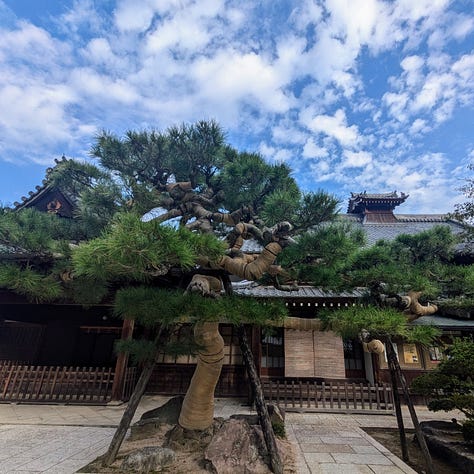
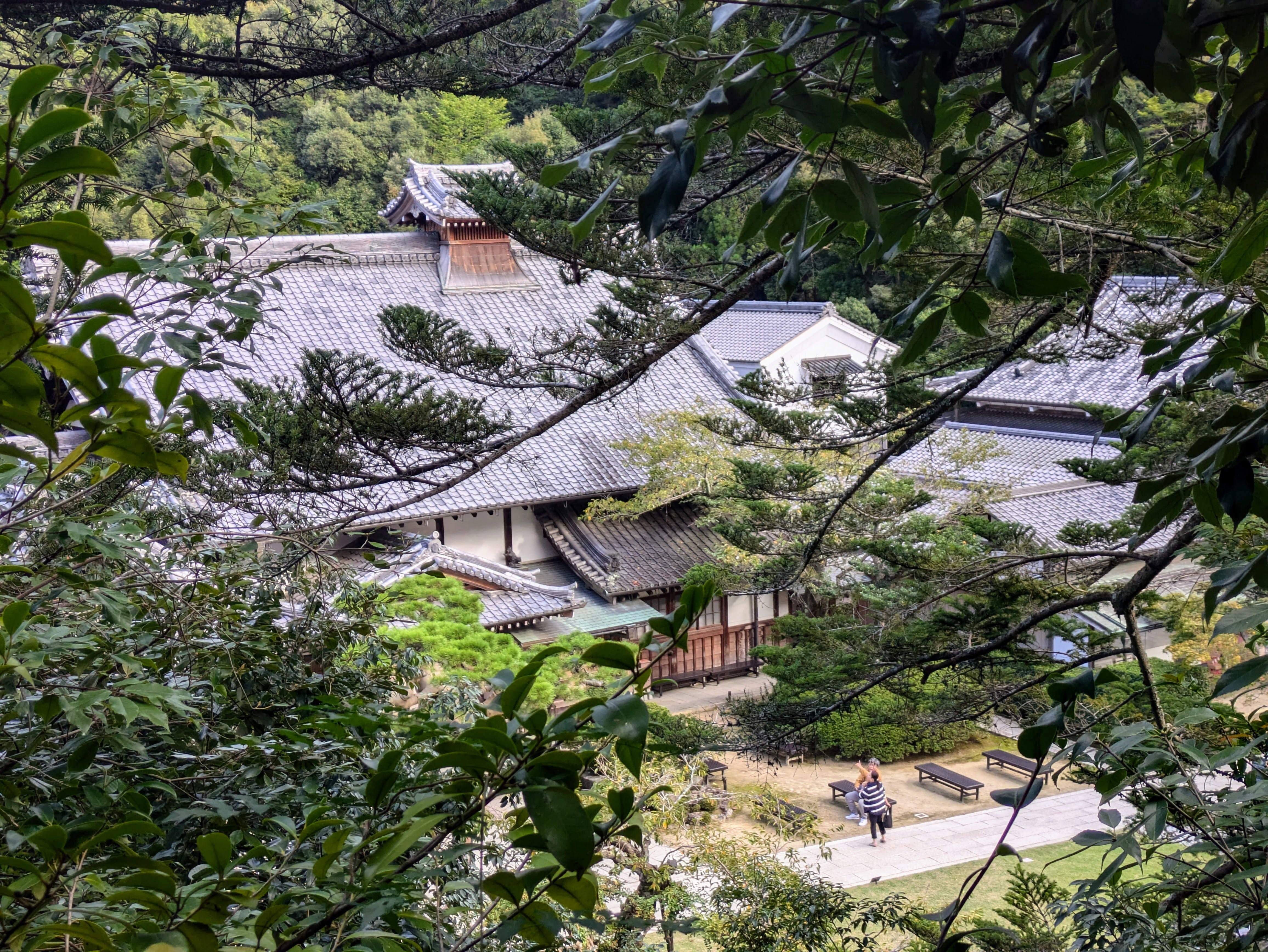
The temple is nestled among mountains and ancient trees. Near the entrance, two tall gingko trees, which are over four hundred years old, turn a beautiful shade of yellow in autumn. A stream flows in the distance, and a Japanese garden full of carp fish catches the eye of visitors. They often pause to admire the pond and take in the vast expanse of the temple seamlessly blending into the surrounding nature. For over a thousand years, it has energized its visitors, providing them with a sense of restoration before they continue their journey along the Dragon’s Road, safe in the knowledge that they can return again in the future.
Access: 15 min. on foot from Kiyoshikojin Station on the Hankyu Takarazuka Line. More information here
 Secrets from Japan and beyond