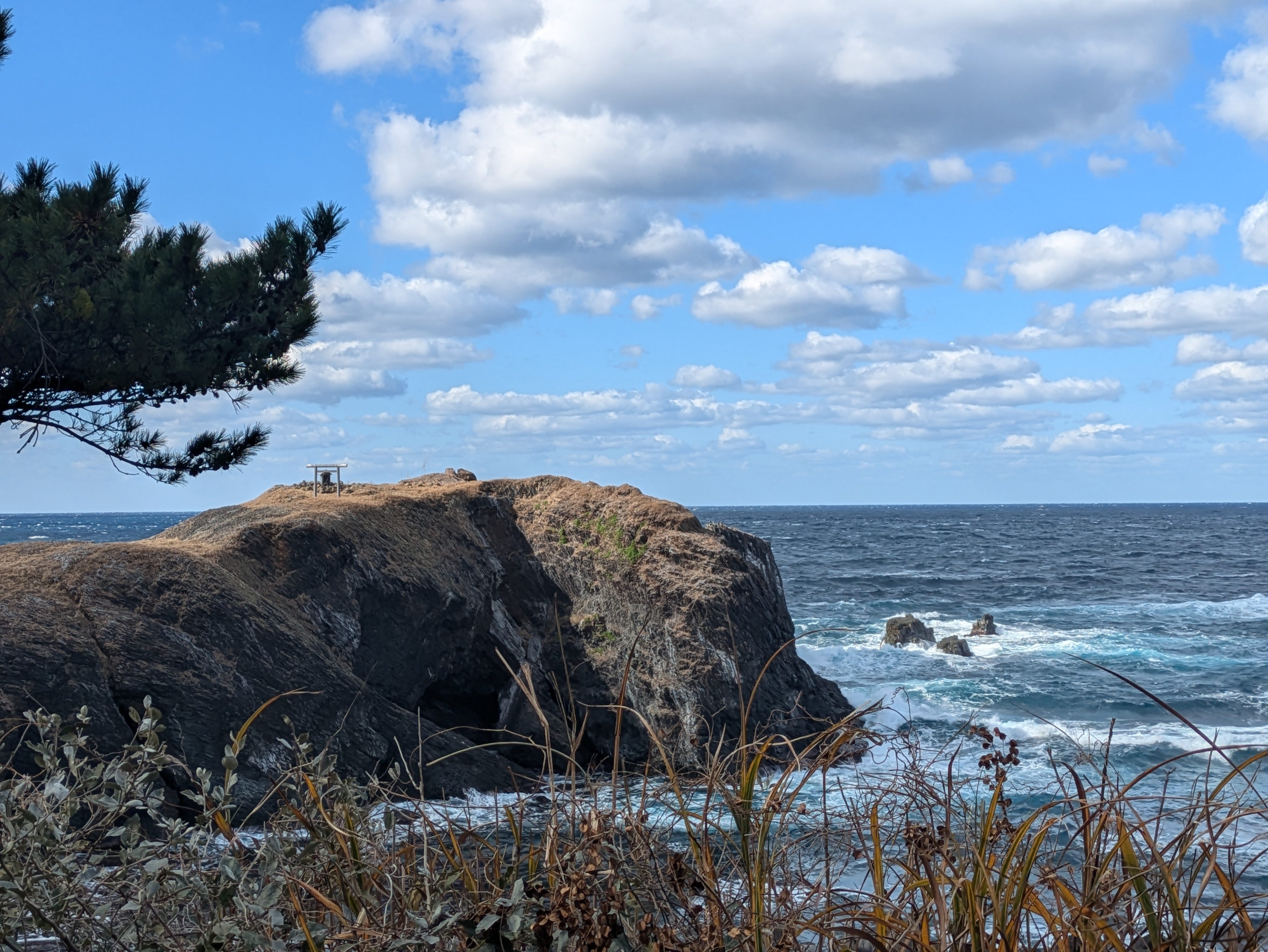
The waves crash against colossal rocks, creating a deafening noise. On a clear winter day, the sea is a vivid turquoise blue, contrasting sharply with the rugged brown shoreline. The wind is loud and relentless, reshaping everything in its path, as seen in the unusual, column-like shapes of the rocks. This dramatic scene evokes the basalt columns of Northern Ireland’s Giant’s Causeway.
From Cape Himosaki, located on the edge of the western Shimane Peninsula, the rest of the world feels distant. The cape consists of two coastal terraces, standing at heights of 25 and 34 meters. These terraces were formed underwater between 200,000 and 100,000 years ago during higher sea levels. Over millennia, relentless waves flattened the seabed, creating the terraces visible today.
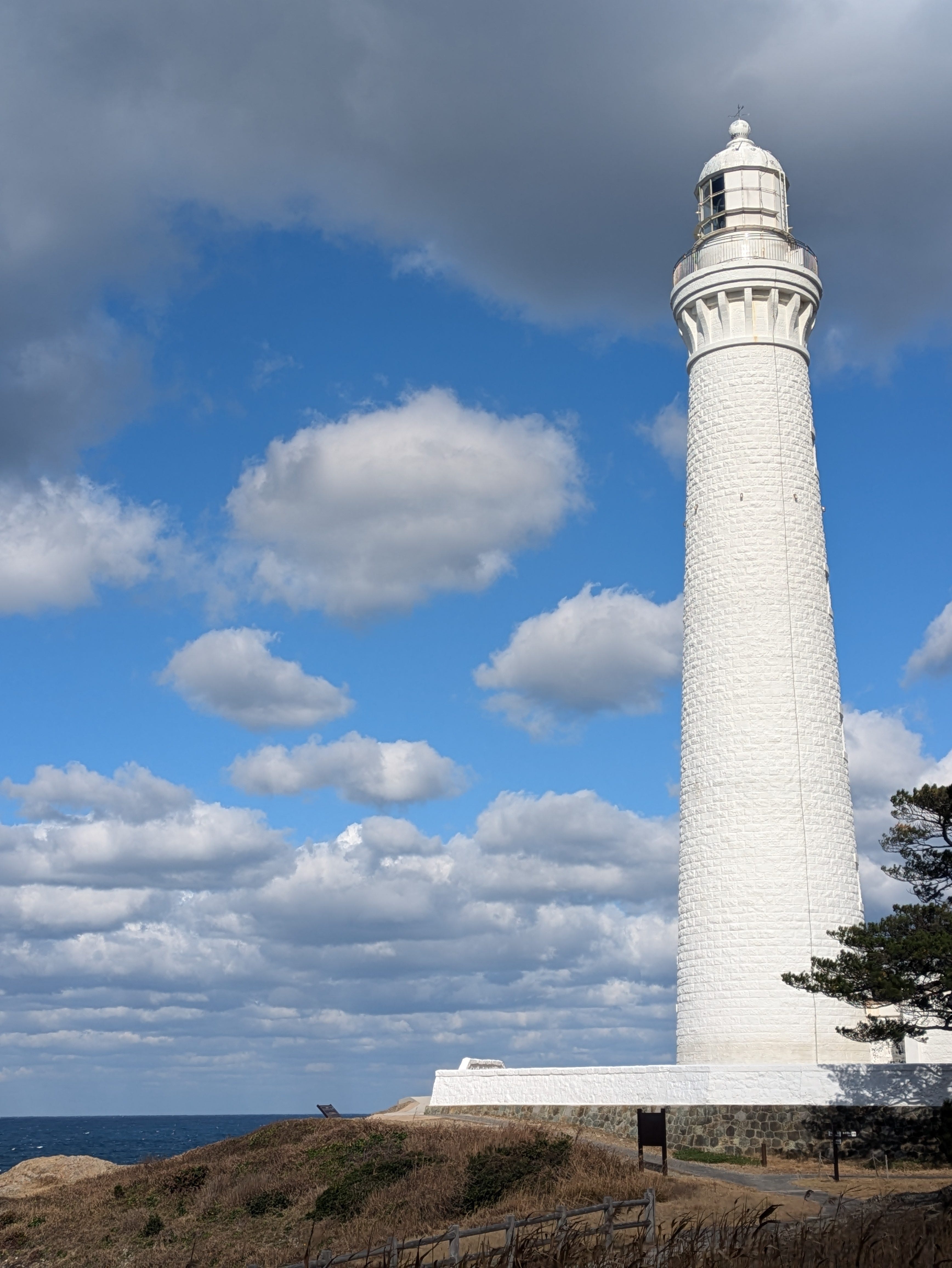
Amid this wild backdrop stands a gleaming white structure: the Hinomisaki Lighthouse. Listed as one of the 100 best lighthouses in the world, its construction began in 1900. The architecture is Western in style but was designed and built by a Japanese architect. At 44 meters, it holds the distinction of being Japan’s tallest lighthouse.
Lighthouses have long been symbolic structures, guiding ships to safety since ancient times. Their history stretches back to the beacon fires mentioned in Homer’s Iliad and Odyssey (8th century BCE) as well as Egypt’s famed Lighthouse of Alexandria, built in 279 BCE.
In Japan, the history of lighthouses as navigational aids dates back roughly 1,200 years. In those early days, people lit smoke signals during the day and bonfires at night to guide ships near Kyushu’s southern islands. The Edo Treaty of 1866, signed by Japan, the UK, France, the Netherlands, and the United States, marked a turning point. The treaty required Japan to build lighthouses at key locations to ensure the safe arrival of foreign ships. Sixty-four lighthouses built during the Meiji period (1868–1912) remain operational today.
Lighthouses, typically located on cliffs or at harbor entrances, serve as navigational aids. However, in an age of GPS, radar beacons, and digital nautical charts, one might wonder: are lighthouses still meaningful? Their historical and cultural significance, combined with their aesthetic beauty, makes them popular among tourists. While modern technology advances, lighthouses continue to be used for navigation and remain powerful symbols.
Japan has approximately 3,000 lighthouses, although some have been closed due to the high cost of maintenance. Despite this, lighthouses continue to attract visitors, and local communities often protest their closures. Beyond their practicality, lighthouses hold deep emotional significance for seafarers, offering hope and the promise of home. For centuries, they have inspired the imaginations of poets and writers, serving as symbols of light, nostalgia, and even isolation.
This complexity is beautifully captured in Lucy Larcom’s 19th-century poem “The Light-Houses”:
Two pale sisters, all alone,
On an island bleak and bare,
Listening to the breakers’ moan,
Shivering in the chilly air;
Looking inland towards a hill,
On whose top one aged tree
Wrestles with the storm-wind’s will,
Rushing, wrathful, from the sea.
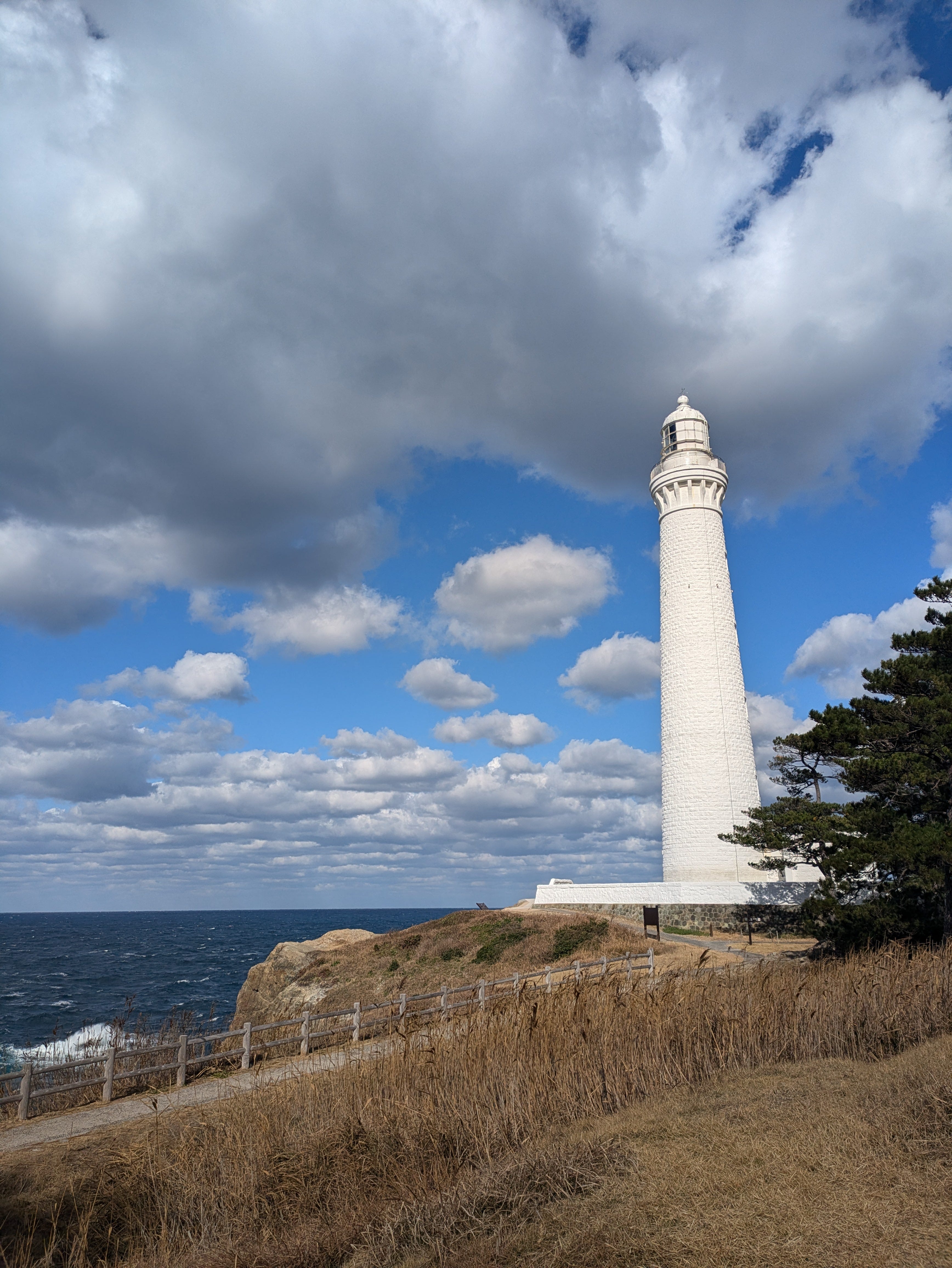
The Izumo Hinomisaki Lighthouse in Shimane remains in operation today. Each night, as the sun sets, it sends its light up to 21 nautical miles (about 39 kilometers). As the Sea of Japan rages all around, suggesting various mythologies and visions, the wind is so cold that it cuts right through to your skin. The sky stretches endlessly, and the mind looks for something to focus on, to reorient itself, and comes upon a white tower—a lighthouse, a friendly beacon on the horizon.
 Secrets from Japan and beyond